


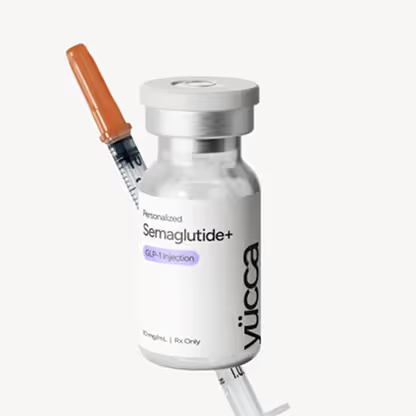



Yes, you can absolutely keep your morning coffee routine while taking weight management medications, but you will likely need to adjust how and when you drink it. Many patients experience a wave of unexpected nausea or severe heartburn after drinking coffee on semaglutide or tirzepatide. This reaction often leads people to believe that caffeine directly interacts with their medication or halts their progress.
The clinical reality is entirely different. There are no direct pharmacological interactions between caffeine and these treatments. The discomfort comes down to simple digestive plumbing. These medications intentionally slow down your digestive tract to keep you full. When highly acidic liquids like coffee enter a slowed digestive system, they sit in the stomach for hours rather than minutes.
Understanding this mechanical shift is the key to managing your side effects. You do not have to abandon your favorite morning ritual. By making strategic changes to the roast, the temperature, and the timing of your brew, you can maintain your routine without sacrificing your comfort.

Key Takeaways
- Delayed gastric emptying causes acidic coffee to remain in your stomach for an extended period, which significantly increases the risk of heartburn and nausea.
- Clinical trials show that gastrointestinal side effects peak during the early weeks of treatment, making coffee harder to tolerate when you first start your medication.
- Switching from hot drip coffee to cold brew reduces the acid content by up to 60 percent, offering immediate relief for patients struggling with acid reflux.
- Oral versions of these medications require a strict 30-minute waiting period on an empty stomach before consuming any food or liquid, including coffee.
- Caffeine is a mild diuretic that can compound the dehydration risks associated with treatment, making a dedicated hydration protocol essential.
Why coffee feels different on semaglutide and tirzepatide
To understand why your morning cup suddenly makes you feel sick, you have to look at how these medications alter your internal pacing. Semaglutide is a GLP-1 receptor agonist, a class of medications that mimics a naturally occurring hormone to regulate blood sugar and suppress appetite. Tirzepatide takes this a step further by also acting on GIP, an incretin hormone that works alongside GLP-1 to regulate blood sugar and appetite.
Both of these active pharmaceutical ingredients rely heavily on delayed gastric emptying, a process where the stomach takes longer than usual to release food and liquid into the small intestine. This delayed emptying is exactly what keeps you feeling full and satisfied after eating a remarkably small meal.
Think of your stomach as a sink with a drain. Normally, when you drink liquids, the drain is wide open. The liquid moves rapidly into your intestines, and the caffeine absorbs quickly to give you that familiar morning boost. When you start treatment, these medications partially plug that drain.
This creates a biological traffic jam. Coffee is naturally highly acidic. It also contains specific compounds that relax the lower esophageal sphincter, a muscular ring that acts as a valve between your esophagus and stomach. When acidic coffee hangs around in your stomach for several hours, it easily splashes back up through that relaxed valve. This mechanical failure is what causes intense acid reflux on GLP-1 therapies.
Additionally, this traffic jam creates a phenomenon known as caffeine persistence. Because the liquid moves into your intestines so slowly, the caffeine enters your bloodstream at a delayed, staggered rate. You might not feel the energy boost immediately, which prompts some people to drink a second cup. Hours later, the combined caffeine finally hits your system. This delayed absorption can lead to unexpected afternoon jitters, rapid heart rate, or sleep disruptions long after your last sip.
That matters immensely for your daily comfort. When you understand that drinking coffee on tirzepatide or semaglutide feels different because of physical digestion speed rather than a dangerous chemical reaction, you can take practical steps to fix the problem.
What the research says about caffeine and GLP-1 side effects
Building a symptom-free routine requires looking closely at the clinical data surrounding gastrointestinal distress. Clinical trials clearly demonstrate that the majority of patients will experience some degree of stomach upset when initiating treatment.
The STEP 8 clinical trial tracked side effects closely. The data revealed that up to 61.1 percent of patients on the 2.4 milligram dose of semaglutide reported nausea during their treatment journey (Source: Rubino et al., JAMA 2022). Similarly, the SURMOUNT-1 trial for tirzepatide showed that mild to moderate gastrointestinal events were the most frequent side effects, particularly during the dose escalation phase (Source: Jastreboff et al., NEJM 2022).
Adding a known gastric irritant like caffeine into an already sensitive digestive system frequently acts as a tipping point. When semaglutide and caffeine side effects overlap, patients often develop dyspepsia, the medical term for indigestion that causes upper abdominal discomfort and fullness.
Current gastroenterology research consistently identifies coffee as a primary dietary trigger for reflux. It stimulates the production of gastric acid. When your stomach is already holding onto contents longer than usual, generating extra stomach acid creates an incredibly hostile environment for your stomach lining.
This environment frequently triggers eructation, the clinical term for belching or burping. When trapped stomach gas mixes with the delayed digestion of coffee and food, patients often experience sulfur-tasting burps.
It is also vital to distinguish between the coffee bean itself and the ingredients you add to your mug. Heavy dairy creams, artificial syrups, and high-sugar flavorings require significant digestive effort. Fats and sugars digest very slowly. When you pour heavy cream into your coffee, you are essentially asking your slowed stomach to process a complex, high-fat meal. For many patients, eliminating the dairy fat and sugar resolves their nausea entirely, proving that the black coffee was never the true culprit.
The Yucca protocol for drinking coffee safely
You do not have to rely on trial and error to figure out your morning routine. Proactive management of your diet is the single most effective way to improve your tolerance to these medications. Managing your habit requires addressing the acidity, the timing, and the temperature of your brew.
The most impactful change you can make is switching to cold brew coffee. Traditional hot drip coffee extracts highly acidic compounds from the beans due to the boiling water. Cold brew utilizes cold water and a prolonged steeping time, which extracts the caffeine and flavor profile while leaving the bitter titratable acids behind. Cold brew is typically 60 percent less acidic than hot coffee. This single swap often completely eliminates heartburn for patients in their first month of treatment.
Never drink your coffee on a completely empty stomach. Food acts as a physical buffer. It soaks up the excess stomach acid and provides a barrier between the caffeine and your sensitive stomach lining. Prioritize a small bite of high-quality protein before your first sip. Eating a single scrambled egg, a handful of almonds, or a few spoonfuls of Greek yogurt 15 minutes before your coffee can entirely prevent first-sip nausea.
Timing your intake around your medication schedule is equally critical. If you utilize injectable medications, providers generally recommend waiting 60 minutes after waking up before consuming coffee. This allows your natural cortisol levels to peak and gives your digestive tract time to wake up.
If you are prescribed the oral form of semaglutide, the rules are rigid and non-negotiable. Oral semaglutide utilizes SNAC, an absorption enhancer that allows peptide medications to survive stomach acid and enter the bloodstream. For this technology to work, you must take the tablet on a completely empty stomach with no more than four ounces of plain water. You must wait a strict minimum of 30 minutes before consuming any other food or liquid, including coffee. Failing to observe this waiting period will destroy the medication before your body can absorb it.
Finally, you must offset the diuretic effect. Caffeine signals your kidneys to release extra water. These medications naturally blunt your thirst cues, meaning you are less likely to feel thirsty even when your body desperately needs fluids. This combination makes dehydration a constant threat. Implement a strict one-to-one rule. For every cup of coffee you consume, you must drink one full glass of water containing electrolytes. Proper importance of hydration prevents the headaches and fatigue that many patients mistakenly blame on caffeine withdrawal.
Hormonal and life stage considerations for caffeine on GLP-1s
Metabolic health and caffeine interact differently depending on your life stage and hormonal baseline. Because these medications fundamentally alter your digestion and energy utilization, certain groups need to monitor their caffeine intake with greater scrutiny.
Patients utilizing oral contraceptives face unique risks. Because these weight management therapies delay gastric emptying, they can alter the absorption rate of daily birth control pills. Providers frequently advise using backup contraception for four weeks after starting treatment and for four weeks after every dose escalation. If drinking highly acidic coffee triggers severe nausea that leads to vomiting, the efficacy of your oral contraceptive is further compromised. Protecting your stomach lining is directly linked to protecting your reproductive planning.
Bone density requires special attention during any period of rapid weight loss. Shedding body mass naturally reduces bone mineral density over time. High caffeine consumption actively interferes with the body's ability to absorb calcium in the intestines. For adults over 40, preserving bone mass is just as critical as lowering body fat. Excessive coffee consumption coupled with a reduced appetite can easily lead to a calcium deficit.
Hormonal shifts during perimenopause and menopause introduce another layer of complexity. Caffeine is a well-documented trigger for vasomotor symptoms, commonly known as hot flashes. The metabolic shifts induced by GLP-1 therapy can sometimes amplify temperature regulation issues temporarily. Since many patients mistakenly attribute these hot flashes to their new medication, they fail to realize that their morning hot coffee is actually the trigger.
Switching to half-caf blends or iced beverages offers dual benefits for this demographic. Lowering the temperature and the stimulant load simultaneously reduces the risk of menopausal hot flashes while preventing medication-induced acid reflux. Listening to your body's new signals allows you to adapt your habits safely.
Frequently Asked Questions
Can I drink coffee while taking semaglutide or tirzepatide?
Yes, you can generally drink coffee on semaglutide or tirzepatide. There are no known direct pharmacological interactions between these GLP-1 medications and caffeine. However, because these medications slow down your digestion, coffee may stay in your stomach longer, which can sometimes increase feelings of nausea or acid reflux.
Why does coffee make me feel nauseous on semaglutide?
Nausea occurs because GLP-1 medications cause delayed gastric emptying, meaning the acid and caffeine in coffee sit in your stomach for an extended period. This prolonged exposure can irritate the stomach lining. To reduce nausea, try drinking your coffee after a small, protein-rich meal rather than on an empty stomach.
Does caffeine affect how well semaglutide or tirzepatide works?
There is no clinical evidence suggesting that caffeine interferes with the weight-loss efficacy or blood sugar regulation of semaglutide or tirzepatide. While caffeine is a stimulant, it is processed through different pathways in the body. The main concern is managing overlapping side effects like increased heart rate or dehydration.
Should I wait to drink coffee after taking oral semaglutide?
If you are taking the oral form of semaglutide (Rybelsus), you must wait at least 30 minutes after your dose before consuming anything, including coffee. For injectable semaglutide or tirzepatide, there is no mandatory wait time, though many providers recommend a 60-minute window to allow for optimal absorption.
Is decaf coffee better for patients on GLP-1 medications?
Decaf coffee can be a better option if you experience jitters, heart palpitations, or severe nausea. While decaf is still acidic, it lacks the stimulant properties that can compound the slight heart rate increase sometimes seen with GLP-1s. Switching to decaf helps isolate whether your symptoms are from the caffeine or the acidity.
How can I prevent acid reflux from coffee while on a GLP-1?
To minimize acid reflux, switch to low-acid coffee options like cold brew or dark roasts. Avoid adding heavy creamers or high-sugar syrups, as fats and sugars can further slow digestion and trigger heartburn. Additionally, staying upright for at least an hour after drinking your coffee can help prevent reflux.
This article is for informational purposes only and does not constitute medical advice. Always consult a qualified healthcare provider before starting any new medication or treatment. Results may vary. Compounded semaglutide and compounded tirzepatide have not been approved or evaluated by the FDA for any indication.
References

Aaron Lee is the co-founder and CEO of Yucca Health, with over a decade of experience spanning clinical operations, growth marketing, and healthcare strategy. His writing draws on 15+ years in the industry to explore health, technology, and the systems worth fixing — making complex topics clear and actionable.
Read Full Bio