








In the 2021 STEP 1 clinical trial, participants taking semaglutide lost an average of 14.9% of their body weight over 68 weeks (Source: STEP 1 Trial, Wilding et al., NEJM 2021). This landmark result fundamentally shifted modern medicine. It proved that chronic weight management requires biological intervention, not just immense willpower.
For decades, patients have been told to eat less and move more. This outdated advice completely ignores the complex hormonal signaling that controls human hunger. If you have ever felt like you are fighting a losing battle against your appetite, it is not because you lack discipline. It is because your body's fullness signal is stuck on mute.
Understanding how do GLP-1 medications work requires looking closely at the communication pathways between your stomach and your brain. These medications act as precise biological tools. They correct the hormonal miscommunications that cause constant cravings and metabolic resistance. This guide explores the medical science behind these treatments. It explains how they interact with your brain and gut to level the playing field and support long-term health.

Key Takeaways
- GLP-1 medications mimic natural hormones to amplify fullness signals and correct biological miscommunications between the gut and the brain.
- Clinical trials demonstrate significant results, with semaglutide users losing an average of 14.9% of their body weight and tirzepatide users losing an average of 20.9%.
- These treatments target the hypothalamus directly to silence food noise and quiet constant intrusive thoughts about eating.
- By improving insulin sensitivity, these medications help shift the body from a state of stubborn fat storage to active fat utilization.
- Sustainable weight loss typically becomes visible after four to eight weeks as the dosage safely increases to therapeutic levels.
The gut-brain connection and mechanism of action
GLP-1 medications act like a volume knob for your hunger. They turn down the loud cravings in your brain so you can finally hear when your stomach is actually finished. To understand the GLP-1 mechanism of action, you have to look at the incretin effect. The incretin effect is a natural physiological process where your intestines release hormones in response to eating food.
One of these critical hormones is GLP-1. GLP-1 is a natural gut hormone that tells your brain you are full and slows digestion to make that feeling last. For many people dealing with metabolic resistance, this natural signal is extremely weak. The brain never quite gets the message that the physical tank is full. GLP-1 receptor agonists like semaglutide work by replacing and amplifying this missing messenger. They circulate through your bloodstream and bind to highly specific receptors in multiple organs.
The most profound changes happen in the brain. The medication targets the hypothalamus, which is the region responsible for regulating appetite and reward-seeking behaviors. This interaction explains how GLP-1 affects the brain so powerfully. It effectively silences what is food noise. Food noise refers to constant intrusive thoughts about eating that consume your mental energy. When the medication binds to these neural receptors, those relentless thoughts simply fade away. Patients frequently describe this as a sudden, unfamiliar sense of mental quiet.
Simultaneously, the medication works directly on the digestive system through slowed gastric emptying. Slowed gastric emptying is a biological process that extends the time nutrients stay in your stomach after a meal. Because the food physically remains in your stomach longer, you feel satisfied for hours. This delayed emptying is also why some patients experience common gastrointestinal side effects during their first few weeks of treatment. Managing these early symptoms usually involves eating smaller meals and staying well hydrated as your body adjusts.
Your pancreas also plays a major role in this biological process. When your blood sugar rises after a meal, the medication signals your pancreas to release the appropriate amount of insulin. It does this only when necessary, avoiding the dangerous blood sugar spikes and crashes that trigger intense cravings. By addressing the brain, the stomach, and the pancreas simultaneously, these medications repair a broken communication loop. They replace daily exhaustion with true biological balance.
Proven results from STEP 1 to the 2026 gold standard
In major clinical studies, people did not just lose weight. They saw a 20% drop in heart attack and stroke risks, proving this is about whole-body health rather than just the scale (Source: SELECT Trial, Lincoff et al., NEJM 2024). The data behind these treatments represents a massive leap forward in modern healthcare.
The pivotal STEP 1 trial published in 2021 tested semaglutide in adults without diabetes. Participants taking a 2.4mg weekly dose (the dosage found in name brands like Wegovy) lost an average of 14.9% of their body weight, while the placebo group lost only 2.4% (Source: STEP 1 Trial, Wilding et al., NEJM 2021). This exact data firmly established semaglutide as a highly effective tool for chronic weight management.
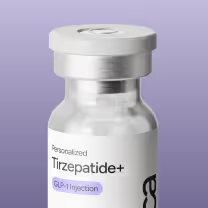
One year later, the SURMOUNT-1 trial evaluated tirzepatide. Participants taking the highest 15mg dose of tirzepatide lost an average of 20.9% of their body weight over 72 weeks (Source: SURMOUNT-1, Jastreboff et al., NEJM 2022). This outcome sparked widespread interest in understanding the semaglutide vs tirzepatide mechanism.
Semaglutide is a single agonist that targets only the GLP-1 receptor. Tirzepatide belongs to a newer class of dual GIP and GLP-1 receptor agonists. GIP is a secondary digestive hormone that further enhances insulin secretion and helps break down fat more effectively. By activating both receptors simultaneously, tirzepatide amplifies the metabolic effects. This synergistic action often leads to greater overall weight loss and improved patient tolerability. These different mechanisms of action allow providers to tailor treatments carefully to individual patient needs.
As of 2026, clinical understanding has evolved well beyond just the initial weight loss phase. Recent data shows that step-down dosing protocols are highly effective for maintaining weight loss after the initial intensive phase. This means patients can often transition to a lower, sustained maintenance dose to preserve their metabolic health long-term.
Furthermore, recent Mayo Clinic retrospective data from 2026 confirms that tirzepatide led to a 23% average weight reduction in postmenopausal women (Source: Tchang et al., The Lancet Diabetes & Endocrinology 2026). This data matches or exceeds results seen in younger demographics, demonstrating that these medications remain effective even when natural hormones decline. The evidence clearly shows these medications are powerful, long-term tools for comprehensive metabolic repair.
Correcting the willpower gap and metabolic resistance
When your metabolism is resistant, your body tries to save every single calorie you eat. Traditional dieting often fails because it triggers an ancient survival mechanism designed to prevent starvation. When you drastically cut calories, your body responds by lowering your metabolic rate and rapidly increasing hunger hormones.
This biological pushback is rooted in the set point theory. The set point theory is the concept that your body fiercely defends a specific baseline weight by altering your metabolism and appetite. For individuals with metabolic resistance, this set point is abnormally high. Their body actively fights against any weight loss effort. This creates a massive willpower gap where sheer mental effort is completely overpowered by hormonal survival signals.
GLP-1 medications bridge this gap by altering how your body handles and stores energy. A key factor is the relationship between insulin sensitivity and GLP-1. Insulin sensitivity is a measure of how effectively your cells respond to insulin and use glucose for energy rather than storing it. Overweight individuals often suffer from insulin resistance, meaning their pancreas must pump out massive amounts of insulin just to maintain normal blood sugar. High insulin levels biochemically lock fat inside your cells, making weight loss nearly impossible.
These medications fundamentally improve this sensitivity at a cellular level. They help your pancreas release the exact right amount of insulin at the precise moment it is needed. This corrects the underlying biological imbalances and shifts your body from a state of fat storage to fat burning.
This mechanism also explains the biological reasons for weight loss plateaus. As you lose weight, your body naturally requires less energy to function, and your metabolic rate inevitably drops. Furthermore, your hormone levels attempt to stabilize at the new, lower weight. Medical providers fully anticipate these plateaus. Providers overcome them by safely and systematically titrating the medication dose upward over several months. Titrating allows the medication to continuously outpace the body's attempts to halt weight loss. It ensures the metabolic reset continues until you reach a healthy, sustainable baseline. By addressing the root cause of metabolic resistance, these treatments finally validate the patient experience.
Women's health and navigating PCOS, menopause, and fertility
For many patients, hormones are often the invisible hand making weight loss impossible. Estrogen, progesterone, and testosterone drastically influence how and where the body stores fat. When these hormones fluctuate or decline, the metabolic system often becomes highly resistant to traditional lifestyle changes.
Patients managing PCOS frequently experience severe weight resistance. PCOS is a hormonal disorder that often causes severe insulin resistance and irregular metabolic function. In these individuals, high insulin levels trigger the ovaries to produce excess androgens, driving further weight gain and irregular menstrual cycles. GLP-1 therapies directly address this frustrating cycle by significantly improving insulin sensitivity. Recent meta-analyses show that correcting this insulin response helps regulate menstrual cycles and reduces overall androgen levels, even with modest weight loss.
Similarly, people going through perimenopause and menopause face unique metabolic challenges. The natural decline in estrogen typically drives a significant increase in visceral fat. Visceral fat is the deep, inflammatory belly fat that wraps around internal organs and drastically increases cardiovascular risk. Data confirms that GLP-1 and GIP agonists are highly effective at targeting and reducing this specific type of inflammatory fat. They provide a precise medical intervention for a problem that diet alone rarely solves.
These hormonal shifts also bring crucial fertility considerations. Correcting metabolic dysfunction often leads to the unexpected return of ovulation, a trend widely referred to as the Ozempic baby phenomenon. As insulin resistance decreases and body weight normalizes, fertility can increase rapidly and unpredictably.
Patients must take specific precautions regarding contraception during treatment. This is especially true for those using tirzepatide. Because the medication delays gastric emptying, it may decrease the absorption and overall effectiveness of oral birth control pills. Patients are strongly advised to use backup barrier contraception methods when starting treatment or increasing their dose. By understanding how glp-1 medications stop food noise and balance complex hormonal signals, patients can safely navigate these critical life stages. Navigating these changes requires specialized medical oversight. Providers understand that weight management during these phases requires an individualized approach. Adjusting medication dosages to accommodate fluctuating natural hormones ensures long-term safety and success.
Frequently Asked Questions
How do GLP-1 medications work for weight loss?
GLP-1 medications work by mimicking a natural hormone that targets the specific areas of the brain regulating appetite. They function through a multi-pathway approach by increasing feelings of fullness, slowing digestion in the stomach, and improving how your body processes insulin. This comprehensive biological intervention helps shift the body from fat storage to fat utilization. Patients no longer have to fight their own biology to achieve sustainable health.
What is "food noise" and how do GLP-1s stop it?
Food noise refers to the constant, intrusive thoughts about eating that dominate your mental energy throughout the day. GLP-1 medications interact directly with the brain's reward centers, specifically the hypothalamus, to dampen and silence these overwhelming signals. By quieting the biological urge to eat, patients find it significantly easier to make healthier choices without relying solely on pure willpower.
Do GLP-1 medications change your metabolism?
Yes, these medications actively improve your metabolic health by enhancing insulin sensitivity and regulating blood sugar levels. They help the pancreas release the right amount of insulin at the right time, preventing severe spikes and crashes. This precise action corrects underlying biological imbalances that often make traditional restrictive dieting entirely ineffective for those struggling with chronic metabolic resistance.
How long does it take for GLP-1 medications to start working?
Most patients notice a significant reduction in appetite and food cravings within 24 to 48 hours after their first dose. While the medication begins affecting your blood sugar and gastric emptying immediately, sustainable weight loss typically becomes visible on the scale after four to eight weeks. The results become more pronounced as your provider safely titrates the dosage upward.
What is the difference between GLP-1 and GIP medications?
GLP-1 primarily focuses on enhancing satiety, reducing cravings, and slowing digestion in the stomach. GIP is a second natural hormone found in dual agonists like tirzepatide, and it functions slightly differently. GIP further enhances insulin secretion and may help break down fat cells more effectively. This dual-action approach often leads to greater overall weight loss and improved patient tolerability.
Will I regain weight if I stop taking GLP-1 medications?
Clinical data suggests that stopping the medication can lead to weight regain because these treatments manage the underlying biological causes of obesity. When the metabolic support is removed, the biological imbalances and food noise typically return. Many modern healthcare providers now view these medications as long-term management tools for chronic metabolic health rather than a short-term quick fix.
If you are ready to find out if your fullness thermostat needs a biological reset, our clinical team is here to help you evaluate your unique metabolic profile. Understanding your biology is the first step toward lasting health. You can take the Yücca Metabolic Assessment to check your eligibility and see if this medical approach aligns with your goals. Our licensed providers will review your health history and guide you toward a treatment plan designed entirely around your needs.
References

Aaron Lee is the co-founder and CEO of Yucca Health, with over a decade of experience spanning clinical operations, growth marketing, and healthcare strategy. His writing draws on 15+ years in the industry to explore health, technology, and the systems worth fixing — making complex topics clear and actionable.
Read Full Bio