






You typed "semaglutide cost without insurance" into your search bar after your insurance provider denied coverage for a medication your doctor already prescribed. About 25 percent of current users have insurance but still pay the full out-of-pocket cost due to these exact coverage denials (Source: KFF Health Tracking Poll, 2025). Jumping through administrative hoops to secure a prescription, only to hit a wall of red tape, is exhausting. The massive sticker shock at the local pharmacy counter only adds to the frustration.
This guide offers a comprehensive, transparent comparison of cash-pay options available in 2026. We cover everything from the confusing retail markups on brand-name injections to streamlined telehealth programs. By understanding the true semaglutide cost without insurance, you can bypass the traditional pharmacy hurdles. You will find a sustainable path forward that fits your budget and protects your long-term metabolic health.

Key Takeaways
- Without insurance, the standard wholesale acquisition cost for a 28-day supply of branded Wegovy sits at $1,349 in 2026.
- Telehealth programs utilizing compounded semaglutide offer a more accessible pathway, but patients must carefully check for hidden dosage or provider fees.
- Clinical trials show participants taking semaglutide 2.4 mg experienced an average body weight reduction of 14.9 percent over 68 weeks.
- Transparent flat-rate pricing models protect patients from the financial strain of unexpected out-of-pocket price hikes as their treatment dosage increases.
- Many cash-pay telehealth programs qualify as eligible medical expenses under tax-advantaged FSA or HSA accounts.
The reality of the out of pocket cost for semaglutide
Without insurance, buying brand-name semaglutide at a local pharmacy usually costs well over $1,000 every single month. The standard 2026 wholesale acquisition cost, the baseline price set by pharmaceutical manufacturers before pharmacy markups, is $1,349 for a 28-day supply of branded Wegovy (Source: Medical News Today, 2026). This out of pocket cost for semaglutide places a massive financial burden on cash-paying patients.
To understand why patients are willing to seek this medication despite the cost, we have to look at the mechanism of action. Semaglutide is a long-acting GLP-1 receptor agonist, a class of medications that mimic natural gut hormones to stimulate insulin secretion and signal the brain that you are full. Centrally, the medication crosses the blood-brain barrier and interacts with your hypothalamus. It activates specific neural pathways to amplify signaling for satiety and drastically reduce your hunger drive.
It also slows gastric emptying, the rate at which food leaves your stomach and enters your digestive tract. Because your stomach physically empties slower, you feel full for a much longer period after eating a smaller meal.
Treating metabolic health conditions like PCOS and menopause
When researching how to get semaglutide without insurance, many patients are seeking relief from complex hormonal conditions that traditional healthcare systems frequently dismiss. Health insurance companies routinely categorize medications for metabolic health as vanity expenses. This perspective ignores the deep physiological realities of insulin resistance, particularly for those navigating conditions like polycystic ovary syndrome or perimenopause.
Polycystic ovary syndrome, commonly known as PCOS, is a hormonal disorder causing enlarged ovaries with small cysts on the outer edges. While semaglutide is not strictly indicated by the FDA solely for PCOS, medical providers frequently prescribe it off-label. It directly addresses the core insulin resistance that drives many of the most disruptive PCOS symptoms. By regulating how the body processes glucose, the medication often helps to stabilize menstrual cycles and improve overall hormonal balance. It is incredibly frustrating for patients to face insurance denials for a treatment that resolves these foundational metabolic issues.
Similarly, the natural transition through perimenopause and menopause triggers significant metabolic shifts. During this life stage, hormonal fluctuations naturally drive a sharp increase in visceral fat and elevated insulin resistance. Visceral fat, the dangerous type of fat that wraps around your internal abdominal organs, becomes much harder to lose through diet and exercise alone. Semaglutide is highly effective at countering this specific age-related metabolic shift. It provides the hormonal signals necessary to jumpstart a stalled metabolism.
Patients managing their fertility must also navigate careful clinical guidelines. Providers mandate that patients discontinue semaglutide at least two months before a planned pregnancy due to the drug's long half-life and potential fetal risks. However, as weight loss restores metabolic health, many people experience an unexpected return of fertility. Because delayed gastric emptying can marginally affect the absorption curve of oral birth control pills, highly effective barrier contraception remains critical during the dose-escalation phase.
You deserve a healthcare partner that understands these intersecting factors. You should not have to fight for coverage when your metabolic health is on the line.
Why retail pricing remains out of reach
Retail prices remain exceptionally high due to pharmaceutical patent protections and massive research and development costs. Complex pharmacy benefit manager pricing models add hidden layers of markup. Without an insurance plan to negotiate discounts, cash-paying individuals bear the brunt of these inflated structures. This makes traditional pharmacy routes completely cost-prohibitive for the average adult.
Many patients attempt to offset this out of pocket cost for semaglutide by searching for manufacturer coupons. These savings cards for brand-name medications frequently look like a lifeline. However, they almost always require the patient to have commercial insurance that already covers a portion of the drug. If your insurance denies coverage entirely or you are uninsured, these coupons often provide minimal financial help. You are left with a massive out-of-pocket balance right at the pharmacy counter.
What the 2026 research shows about the semaglutide investment
Patients facing high cash-pay prices naturally wonder if the clinical outcomes justify the financial commitment. The data strongly suggests that treating metabolic health with this class of medication provides significant, long-lasting benefits.
In the landmark STEP 1 trial, participants taking semaglutide 2.4 mg saw an average body weight reduction of 14.9 percent compared to just 2.4 percent in the placebo group (Source: Wilding et al., NEJM 2021). Furthermore, 86 percent of the participants in this trial lost at least 5 percent of their baseline body weight. The STEP 3 trial provided further evidence that when semaglutide is combined with intensive behavioral therapy and lifestyle intervention, the initial weight loss is significantly accelerated.
The benefits extend far beyond a change in the scale. The SELECT trial demonstrated that semaglutide 2.4 mg reduced the risk of major adverse cardiovascular events by 20 percent in high-risk patients (Source: Lincoff et al., NEJM 2023). A major adverse cardiovascular event, often abbreviated as MACE, includes life-threatening incidents like a heart attack or stroke. This proves that the treatment focuses on extending lifespan and improving overall systemic health.
When considering the brand name vs compounded semaglutide cost, patients must factor in the importance of continuous, uninterrupted access to the medication. If you are forced to stop taking the medication abruptly because retail prices become unaffordable, the underlying hormonal imbalances remain. Studies indicate that the biological food noise will likely return, and patients risk regaining the weight they worked so hard to lose.
This highlights why a medically guided protocol is critical. You are not just buying a vial in the mail. A comprehensive telehealth program provides the necessary clinical oversight to monitor your progress and manage any gastrointestinal side effects. Nausea, diarrhea, and vomiting are the most frequently reported side effects, typically peaking during the initial dose escalation phase. A proper program will also emphasize the importance of preserving lean muscle mass during your weight reduction phase. Protecting your metabolic engine makes the financial investment in your health sustainable over the long term.
Breaking down semaglutide telehealth cost compared to retail
The unpredictable landscape of retail pharmacy pricing drives many patients to seek alternative pathways. Comparing standard out-of-pocket retail prices with transparent telehealth clinics reveals a massive difference in long-term affordability. We must look at the semaglutide telehealth cost closely to separate reputable providers from predatory online platforms.
What is the average out of pocket cost for semaglutide?
The table below illustrates the stark contrast between retail pricing, hidden-fee telehealth models, and a transparent flat-rate approach for the first year of treatment.
Many online clinics advertise a low starting price to acquire new patients. These initial offers often fail to mention that the price only covers the lowest starting dose. As your body adapts and you require a higher therapeutic dose, these platforms implement severe upcharges. They may also add hidden fees for mandatory lab work or separate medical consultation billing. This bait-and-switch tactic leaves patients feeling financially trapped just as they begin to see meaningful results.
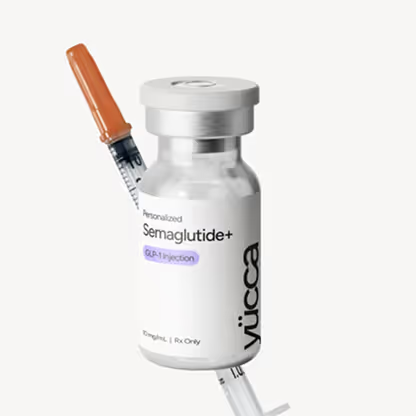
Yücca takes a different approach. We believe healthcare should not require complex math or stressful negotiations. Our semaglutide flat rate covers everything you need. You receive the customized compounded medications, ongoing provider check-ins, and continuous support without any hidden fees. Compounded medications are custom-made by specialized pharmacies rather than mass-produced under a brand patent. This allows us to offer compounded semaglutide prices that are deeply competitive.
How to afford semaglutide without insurance coverage
If you are ready to bypass the traditional pharmacy system, follow these steps to secure reliable treatment:
- Check telehealth alternatives that specialize in metabolic health and offer compounded formulations.
- Look for flat-rate programs that bundle the medication and provider care into one predictable monthly price.
- Utilize FSA/HSA funds, as many cash-pay telehealth programs qualify as eligible medical expenses under tax-advantaged accounts.
- Avoid hidden dosage fees by reading the fine print to ensure the cost will not double when your prescription strength increases.
By choosing a structured, transparent provider, you regain control over your healthcare budget. You can focus your energy on building healthy habits rather than stressing over the next pharmacy bill.
Frequently Asked Questions
How much is semaglutide a month without insurance?
Without insurance, brand-name semaglutide typically costs between $900 and $1,400 per month at standard retail pharmacies. However, patients opting for compounded semaglutide through telehealth providers can often secure customized treatment plans, including provider care and medication, for a transparent, lower monthly flat rate.
Can you get semaglutide without insurance?
Yes, you can get semaglutide without insurance coverage. Many patients choose to pay completely out-of-pocket for brand-name semaglutide at retail pharmacies or utilize telehealth platforms. Telehealth clinics often provide an accessible cash-pay pathway, bundling the cost of medical consultations, lab reviews, and customized compounded medications.
Is compounded semaglutide cheaper than brand-name prescriptions?
Compounded semaglutide is generally more affordable than out-of-pocket retail prices for brand-name equivalents. Because compounded medications are custom-made by specialized pharmacies rather than mass-produced under a brand patent, telehealth providers can often offer these treatments at a fraction of the cost, improving patient accessibility.
Why is semaglutide so expensive at retail pharmacies?
Retail semaglutide prices are high due to pharmaceutical patent protections, massive research and development costs, and complex pharmacy benefit manager pricing models. Without insurance to negotiate discounts, cash-paying patients bear the brunt of these markup structures, making traditional pharmacy routes cost-prohibitive for many individuals.
Are there hidden fees with online semaglutide programs?
Some online programs lure patients with low introductory rates, only to add hidden fees for medical consultations, mandatory lab work, or increased medication dosages. It is crucial to choose a transparent telehealth provider that offers a guaranteed flat monthly rate covering all necessary services.
Do manufacturer coupons work for semaglutide without insurance?
Manufacturer savings cards for brand-name semaglutide typically require the patient to have commercial insurance that covers a portion of the drug. If your insurance denies coverage entirely or you are uninsured, these coupons often provide minimal discounts, leaving you with a massive out-of-pocket balance.
What is the cheapest way to get semaglutide?
The most affordable and transparent way to access this medication is typically through a direct-to-patient telehealth platform offering compounded semaglutide. By avoiding the massive retail pharmacy markups and utilizing a flat-rate pricing model, you can secure continuous care and medication without falling victim to hidden dosage fees.
If you are tired of playing games with your insurance company, there is an easier way. You do not have to fight a massive healthcare bureaucracy just to buy semaglutide online. You can explore our transparent, flat-rate programs at Yücca to see if a provider-guided path is right for you. You can complete a short health assessment at quiz.tryyucca.com and hear back from a real clinician without ever stepping foot in a waiting room.
References

Bethany Kelleher is the CX Manager at Yücca Health, bringing over 20 years of experience across fitness, wellness, and healthcare. Her journey started with her own 100+ pound transformation, which inspired a career in coaching, nutrition, and patient experience. At Yücca, she combines her wellness expertise with healthcare operations to create supportive, results-driven patient experiences.
Read Full Bio