

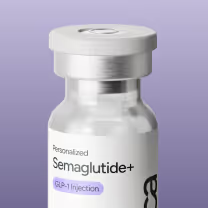
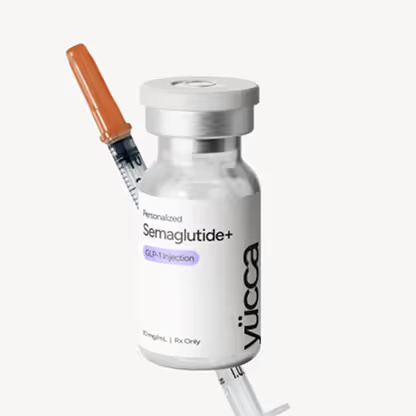



Forty-four percent of patients taking semaglutide experience mild to moderate nausea during the first few weeks of their dose escalation (Source: STEP 1 trial, Wilding et al., NEJM 2021). That number often causes immediate anxiety for new patients holding a medication pen for the very first time. The physical act of administering the medication is only half the process. Managing your bodily response and overcoming the psychological hurdle of your first dose is just as critical to your long-term success. Choosing the correct location on your body directly impacts how comfortable you feel and how your body processes the medication. This guide covers the clinical data behind site selection, the exact technique for minimizing skin discomfort, and the precise schedule for rotating your spots. By understanding the best semaglutide injection sites for weight loss, you can transform a stressful weekly task into an empowered, completely manageable routine.

Key Takeaways
- Clinical trials show zero significant difference in overall weight loss whether you administer your dose in the stomach, thigh, or upper arm.
- Delivering your medication into the outer thigh instead of the abdomen may help reduce gastrointestinal side effects like nausea for sensitive users.
- Moving your injection site by at least one inch every single week is mandatory to prevent permanent tissue damage and ensure consistent drug absorption.
- Using a 31-gauge needle and allowing the medication to reach room temperature for 15 minutes will significantly minimize physical discomfort during the process.
How subcutaneous injections work
Subcutaneous adipose tissue, the layer of fat located directly beneath your skin and above your underlying muscle, is the exact target for these weekly medications. This specific tissue layer has very limited blood flow compared to your muscle tissue or deep veins. That limited circulation is actually a massive advantage for your treatment plan.
When you deliver the medication into this fat layer, it creates a highly controlled environment. It relies on the depot effect.
Depot effect: a biological process where medication pools safely in your fat layer and slowly drips into your bloodstream over several days. Because there are very few nerve endings or large blood vessels in this fatty area, it is the safest and most comfortable way to get long-lasting medicine into your system without needing a daily pill. Think of your fat tissue as a smart, slow-release sponge. It holds onto the liquid and ensures you receive a steady, continuous dose throughout the entire week.
[Image of subcutaneous injection sites on the human body]
Many new patients experience what the community calls liquid gold anxiety. They fear wasting a drop of medication that is both valuable and strictly dosed. You might notice a tiny bead of clear liquid resting on the tip of the needle after you pull it away from your skin. That single drop is completely normal and mathematically accounted for in the volume of your pen. You have received your full prescribed dose.
You also do not need to worry about accidentally hitting a vein. The 4mm to 6mm needles provided in standard kits are specifically sized to reach the fat layer and stop well short of any deep cardiovascular structures.
What the clinical research shows about injection sites
A common myth circulates that injecting medication directly into your stomach will specifically target abdominal fat. This is entirely false. The medication works systemically. It travels through your entire bloodstream and interacts with receptors in your brain and gut regardless of where the needle enters your skin.
The landmark SURPASS-2 trial data confirms this reality. Researchers found zero clinically significant difference in total weight loss or blood sugar reduction based on whether the patient injected in the abdomen, the thigh, or the back of the upper arm (Source: SURPASS Trial Sub-analysis, Knop et al., 2023). Your overall progress will not stall simply because you chose your leg over your stomach.
However, your choice of location heavily influences your side effects profile.
A localized pharmacokinetic study on absorption sites confirmed that medication absorbed from the abdomen enters the bloodstream marginally faster than medication absorbed from the thigh (Source: Pharmacokinetic Study, 2023). That rapid abdominal absorption explains why some patients feel intense peaks of nausea when using their stomach.
Injecting into the dense fat of the outer thigh offers a slightly gentler release into the system. For patients actively managing first month side effects, choosing the right injection site provides a practical strategy to ease their body into the medication without lowering the clinical dose.
Rotating your injection sites for better results
Consistency with your medication requires inconsistency with your needle placement. You must move your injection site every single week.
Failing to rotate your spots leads directly to lipohypertrophy. Lipohypertrophy: the buildup of fatty lumps or hard scar tissue under the skin caused by repeatedly injecting into the exact same location. If you inject into this hardened scar tissue, the smart sponge effect stops working. The scar tissue traps the liquid, preventing it from absorbing properly and drastically reducing the effectiveness of your weekly dose. Ten percent of patients may discontinue treatment entirely due to side effects or poor absorption if site rotation is not managed properly (Source: Frontiers in Endocrinology, 2026).
To prevent tissue damage, you must follow the one-inch rule. The American Diabetes Association recommends maintaining a minimum distance of 2.5 centimeters, or about one inch, between your current injection spot and last week's spot (Source: ADA Guidelines, 2025).
The easiest way to track this is by using the clock method on your abdomen.
- Week one goes at the 12 o'clock position above your navel.
- Week two moves to the 3 o'clock position on the right side.
- Week three goes down to the 6 o'clock position.
- Week four moves to the 9 o'clock position on the left.
You must always stay at least two full inches away from your actual belly button. The tissue directly surrounding your navel is dense and fibrous. Injecting there is significantly more painful and blocks optimal absorption.
Some patients also worry about the visible bruising that can sometimes occur. You can minimize bruising by never rubbing or massaging the skin after you complete the injection. Let the tissue rest completely.
Managing side effects and injection discomfort
Physical discomfort during your weekly dose usually stems from simple technique errors rather than the needle itself. Most modern telehealth kits, including those from Yücca, utilize a 31-gauge needle. Ninety percent of patients report that using a 31-gauge needle, which is roughly the thickness of two human hairs, significantly minimizes any physical pain (Source: Clinical Nursing Journal Review, 2024).
The sharp stinging sensation patients frequently report is almost always caused by temperature or residual alcohol.
Injecting a cold liquid directly from the refrigerator will shock the tissue and cause a sharp sting. To prevent this, take your medication out of the fridge and let it sit at room temperature for 15 to 30 minutes before you begin. You should also ensure that the alcohol from your prep swab has completely air-dried on your skin. Pushing a needle through wet alcohol forces the harsh chemical directly into the micro-puncture, resulting in an immediate burning feeling.
This process is the core of a proper calm prep routine. It transforms a clinical medical task into an intentional moment of self-care.
If you are injecting yourself, the pinch versus stretch debate is easy to resolve. Most adults carrying excess weight should simply keep their skin flat. You only need to pinch the fat into a small mound if you have a very low body fat percentage and need to pull the subcutaneous layer away from the muscle. Insert the needle using a quick, firm, dart-like motion at a perfect 90-degree angle. Hesitating or pushing the needle in slowly will trigger more surface nerve endings and increase your discomfort.
After pressing the plunger, hold the needle in place for six full seconds. This pause allows the internal pressure of the liquid to equalize and ensures the medication fully settles into the fat layer before you withdraw the device.
Hormonal and life stage considerations for injections
Your body does not exist in a static state. Hormonal fluctuations fundamentally alter how you experience pain and how your cells respond to metabolic medications.
Patients going through their menstrual cycle often report heightened skin sensitivity and an increased likelihood of bruising during their luteal phase. The luteal phase occurs in the week leading up to menstruation when specific hormone shifts lower your baseline pain threshold. If you find that your injections suddenly hurt more during this specific week of the month, your technique has not failed. Your body is simply more sensitive to the micro-trauma of the needle. Switching to your least sensitive area, such as the outer thigh, during this week can help manage the temporary discomfort.
Metabolic conditions also play a massive role in your treatment journey. Patients with Polycystic Ovary Syndrome frequently utilize these medications to manage severe insulin resistance.
Insulin resistance: a metabolic condition where your cells stop responding properly to insulin and cause your blood sugar levels to rise uncontrollably. For these patients, adhering to a strict site rotation schedule is absolutely mandatory. Consistent rotation ensures that the medication sensitizes the body to insulin at a perfectly steady rate, avoiding the severe blood sugar crashes that can trigger extreme fatigue or intense sugar cravings.
Finally, you must plan ahead for major life stages. Because these medications utilize the depot effect and stay in your system for an extended period, you must completely discontinue use at least two full months before attempting to become pregnant.
Frequently Asked Questions
Where is the best place to inject semaglutide for weight loss?
The most effective injection sites for semaglutide weight loss are the abdomen, the front of the thighs, or the back of the upper arms. While the medication’s systemic effectiveness remains consistent across all three sites, many patients prefer the abdomen for ease of access or the thigh to potentially minimize nausea.
Does the injection site affect GLP-1 side effects like nausea?
Yes, many patients report that injecting GLP-1 medications into the thigh rather than the stomach can help reduce gastrointestinal side effects like nausea. Clinical observations suggest that absorption rates may vary slightly by site, with the thigh offering a potentially "gentler" release for sensitive users.
How often should I rotate my injection sites?
You should rotate your injection site every week to maintain skin health and ensure consistent medication absorption. For example, if you inject in the stomach, move the needle at least one inch away from your last spot, or switch to the thigh or arm for the following dose.
What happens if I don't rotate my injection sites?
Failing to rotate sites can lead to lipohypertrophy, which is the buildup of fatty lumps or scar tissue under the skin. These lumps can make future injections more uncomfortable and may interfere with how your body absorbs the medication, potentially reducing the effectiveness of your weight loss treatment.
Can I inject semaglutide into my arm by myself?
Yes, you can self-inject in the back of the upper arm, though it may be more difficult than the stomach or thigh. If injecting alone, use a mirror to locate the fatty area of the tricep. Ensure you are reaching the subcutaneous fat layer and not the muscle.
How do I minimize discomfort during my weekly injection?
To minimize discomfort, allow your medication to reach room temperature for 15 to 30 minutes before injecting. Use a fresh alcohol swab to clean the skin, let it air dry completely to prevent stinging, and use a quick, firm "dart-like" motion to insert the needle at a 90-degree angle.
How far from the belly button should I inject?
When injecting in the abdomen, always stay at least two inches away from your belly button. This ensures the medication is delivered into a healthy area of subcutaneous fat while avoiding the more sensitive, fibrous tissue located directly around the navel and any existing scars or stretch marks.
If you are wondering whether this clinical approach could be the missing piece in your metabolic health journey, a licensed Yücca provider can walk you through the details. You can complete a short health assessment at quiz.tryyucca.com and hear back directly from a real clinician. There is no in-person visit required, just straightforward medical guidance tailored to your body.
References

Bethany Kelleher is the CX Manager at Yücca Health, bringing over 20 years of experience across fitness, wellness, and healthcare. Her journey started with her own 100+ pound transformation, which inspired a career in coaching, nutrition, and patient experience. At Yücca, she combines her wellness expertise with healthcare operations to create supportive, results-driven patient experiences.
Read Full Bio