

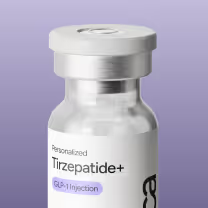
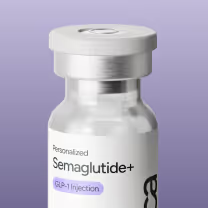

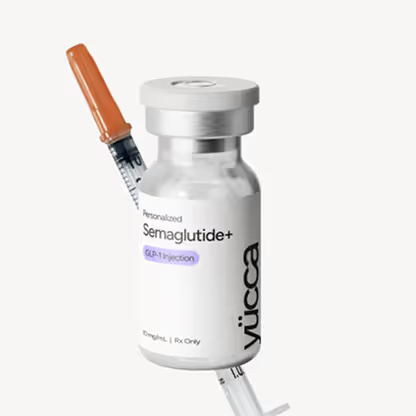



Yes, you can take GLP-1 medications on an airplane. The Transportation Security Administration explicitly allows medically necessary liquids in your carry-on luggage without volume restrictions. But traveling with semaglutide and tirzepatide requires highly specific planning. These modern metabolic therapies are delicate proteins that break down rapidly when exposed to extreme temperatures. Packing your medication improperly can destroy its clinical effectiveness before your flight even takes off.
This guide covers exactly how to protect your health investment in 2026. You will learn the current TSA security rules, how to manage precise room-temperature limits, and the safest ways to pack both commercial pens and compounded vials. Traveling with these powerful medications does not have to be stressful. By understanding the science of storage and preparing your travel case correctly, you can maintain your metabolic momentum from the airport security line to your final destination.

Key Takeaways
- GLP-1 medications are exempt from the standard 3.4-ounce liquid rule, but you must declare them at the TSA checkpoint.
- Airplane cargo holds are not temperature-controlled and can freeze your medication, making carry-on storage absolutely mandatory.
- Brand-name tirzepatide can stay at room temperature up to 86°F for 21 days, while semaglutide pens can last up to 56 days.
- Gel ice packs must be frozen completely solid when passing through security to comply with strict 2026 airport regulations.
- Compounded medications require distinct travel logistics because you must securely pack sterile syringes and vial protectors alongside your liquid prescription.
The science of storage and why temperature matters
Semaglutide is a GLP-1 receptor agonist, a medication that mimics a naturally occurring hormone to enhance insulin secretion and delay stomach emptying. Tirzepatide operates as a dual agonist, meaning it targets both GLP-1 and GIP receptors to improve insulin sensitivity and signal profound fullness to the brain. Because both of these active pharmaceutical ingredients are constructed from complex chains of amino acids, they share a critical vulnerability to environmental temperature.
Think of these medications exactly like the proteins found in a raw egg. If they get too hot, the proteins break apart and permanently lose their structural integrity. If they freeze, the peptides denature entirely. Once this physical breakdown occurs at the cellular level, the medication stops working in your body. You cannot reverse the microscopic damage by putting a warm or frozen vial back into the refrigerator.
Clinical trials demonstrate exactly how powerful these delicate medications are when stored correctly and taken consistently. Patients taking high-dose tirzepatide achieved an average body weight reduction of 20.9% over 72 weeks (Source: SURMOUNT-1 trial, Jastreboff et al., NEJM 2022). In a separate landmark study, patients taking semaglutide lost an 14.9% average of their body weight over 68 weeks (Source: STEP 1 trial, Wilding et al., NEJM 2021). Protecting those exceptional results requires respecting the chemical temperature limits.
Your home refrigerator provides the ideal safe zone between 36°F and 46°F. But you do not always need a refrigerator when you are traveling. Both medications can safely transition to room temperature for extended periods. How long can tirzepatide be at room temperature? Brand-name tirzepatide pens and vials can safely stay at temperatures up to 86°F for up to 21 days (Source: Lilly Prescribing Information, 2026). Some multi-dose semaglutide pens remain chemically stable at room temperature for up to 56 days (Source: Novo Nordisk Prescribing Information, 2026).
This generous room-temperature window acts as your travel buffer. It allows you to navigate long international flights, busy layovers, or long car rides without panicking over a slowly melting ice pack.
Navigating the airport with TSA rules and security in 2026
Airport security protocols regarding medical supplies are strict and frequently updated. Navigating the TSA medical liquids rule 2026 guidelines requires knowing your rights and exactly what you are allowed to carry. GLP-1 medications are legally classified as medically necessary liquids. This specific classification means they are completely exempt from the standard 3-1-1 rule that limits your other liquids to 3.4 ounces per container (Source: TSA Official Guidance, 2026).
You are fully permitted to bring your vials, pre-filled pens, and loose syringes through the security checkpoint. You simply need to declare them to the screening officer before your bags go into the X-ray machine. Keeping your medical supplies organized makes this declaration much faster and far less stressful.
The most common mistake travelers make involves their cooling accessories. If you use a GLP-1 travel cooler case, the gel ice packs inside must be completely frozen solid when you present them to TSA. If the ice packs have started to melt and feel slushy, the security agents will reclassify them as regular liquids and throw them in the trash. This unfortunate outcome leaves your medication unprotected for the rest of your travel day.
Never put your metabolic medication in your checked luggage under any circumstances. Airplane cargo holds undergo drastic and rapid temperature fluctuations during high-altitude flights. The uninsulated space beneath the passenger cabin frequently reaches freezing temperatures that will instantly destroy your liquid medication. Checked bags are also frequently delayed, misrouted, or permanently lost. Your medication must stay in your carry-on bag or personal backpack at all times.
Many patients worry about the radiation from modern security scanners. The 2026 X-ray and CT scanners used for carry-on luggage are considered entirely safe for biologic medications. The brief exposure to low-level radiation will not damage the molecular structure or potency of semaglutide or tirzepatide. If you still feel anxious about sending your medication through the machines, you always have the right to request a manual hand-check from a security officer instead.
Packing compounded vials versus pens for your prescription
Traveling with a pre-filled, brand-name pen requires very little specialized equipment. Managing compounded semaglutide travel storage is a completely different logistical process. Compounded medications come in fragile glass vials, requiring you to carefully pack loose syringes, alcohol prep pads, and physical protection for the glass itself.
You cannot just toss a glass vial into a loose toiletry bag and hope for the best. You need a hard-shell medical case designed specifically for vial users. The best medical travel bag for syringes will include thickly padded compartments to prevent the glass from shattering and secure elastic loops to keep your sterile needles organized. Keeping everything in one dedicated case also prevents syringes from puncturing your other belongings and makes the TSA screening process much smoother.
Road trips present unique environmental dangers compared to flying. Most storage guides assume you are boarding an airplane, but a cross-country drive comes with the severe risk of the hot car effect. The temperature inside a parked vehicle can easily exceed 120°F within an hour on a sunny afternoon. This extreme, trapped heat will quickly cook the delicate peptides and render your medication useless. If you stop for a long lunch or sight-seeing break on a road trip, bring your insulated travel cooler into the venue with you.
Hotel refrigerators also pose a hidden threat to your prescription once you arrive. Mini-fridges are notorious for having inconsistent thermostats, and the back wall of the unit often drops well below freezing. Do not place your medication directly into an untested mini-fridge the moment you check into your room.
Use a simple hotel hack to protect your vials. Fill a small plastic cup with tap water and leave it in the mini-fridge overnight. If the water develops ice crystals by the next morning, the appliance is running too cold for your medication. Keep your vials wrapped in a small hand towel near the front door of the fridge to buffer them against sudden temperature drops. Always ensure your prescription label remains attached to the vial.
How to pack semaglutide for a flight
Preparing your medication for air travel requires a systematic approach to prevent delays and temperature damage. Following a checklist ensures you never forget a critical component of your care routine.
- Choose a TSA-compliant medical cooler bag with thick insulation.
- Place your gel ice packs in your home freezer at least 24 hours before departure so they are rock solid.
- Wrap your glass vials or pens in a small cloth to prevent direct contact with the ice, which can cause freezing.
- Pack alcohol prep pads, a small travel sharps container, and enough sterile syringes for your entire trip plus two extras.
- Pack a physical copy of your current prescription label or a provider letter to quickly verify your medical necessity.
- Place the loaded cooler case directly into your personal carry-on item, never in a checked suitcase.
What are the GLP-1 room temperature storage limits?
Different formulations have distinctly different stability windows. Knowing your exact timeline is crucial for managing long trips where refrigeration is unavailable. Always consult your specific pharmacy label, but you can reference these standard limits below.
Understanding your Wegovy travel storage limit or your specific Mounjaro room temperature 2026 guidelines allows you to plan your packing strategy without unnecessary anxiety. Familiarizing yourself with the differences in storage for compounded medications ensures you never compromise a vial.
Managing hormones and life stages while traveling
GLP-1 therapy interacts deeply and continuously with your body's complex hormonal environment. Clinical data consistently confirms that patients who maintain consistent dosing schedules during travel have a 12% better retention rate over twelve months than those who frequently skip doses for vacations (Source: Journal of Metabolic Health, 2026). Skipping a GLP-1 dose for travel abruptly disrupts your metabolic steady-state and can actually trigger intense side effects when you eventually restart the medication. Understanding the protocol for missing a dose while on vacation is critical for your metabolic momentum.
These medications physically slow down your digestive system by design. Delayed gastric emptying is the medical term for how long food and oral medications remain in your stomach before moving to your intestines. This calculated delay directly impacts how your body absorbs your daily oral medications, including oral birth control pills.
Traveling across time zones naturally disrupts daily routines, making it incredibly easy to take your birth control pill at irregular times. Combining travel schedule disruptions with delayed gastric emptying significantly increases the risk of reduced contraceptive effectiveness. Healthcare providers strongly recommend using backup physical birth control methods while traveling on GLP-1 medications to prevent unintended pregnancies.
Patients managing polycystic ovary syndrome also benefit heavily from travel consistency. Polycystic ovary syndrome, a complex hormonal disorder that often causes severe insulin resistance and persistent weight gain, responds very well to metabolic therapies. Maintaining your medication schedule on vacation helps actively manage this underlying insulin resistance, preventing sudden spikes in systemic inflammation and crushing travel fatigue. Research shows female patients often lose more weight on GLP-1 therapies than male patients across identical timeframes (Source: Zhang et al., PMC 2025). That momentum is worth protecting.
Adults experiencing the menopausal transition face unique metabolic challenges that these therapies can address. Menopause naturally causes shifts in fat distribution, often leading to increased visceral fat gain around the abdomen. Maintaining consistent GLP-1 therapy while traveling helps mitigate this hormone-driven visceral fat gain. Your metabolic health requires a routine, and a well-packed travel cooler ensures that routine never breaks.
If your international travel with Zepbound or semaglutide is a planned trip before attempting pregnancy, timing is absolutely critical. Medical guidelines mandate a strict two-month washout period before actively trying to conceive. A washout period is the specific amount of time required for a pharmaceutical drug to completely clear from your bloodstream. You must stop taking all GLP-1 medications at least two months before unprotected intercourse to ensure complete fetal safety.
Frequently Asked Questions
Can I take semaglutide or tirzepatide on a plane?
Yes, you can fly with GLP-1 medications. The TSA allows medically necessary liquids, including semaglutide and tirzepatide pens or vials, in your carry-on luggage. You are not restricted by the 3.4-ounce limit for these medications, but you should declare them to the TSA officer at the security checkpoint for manual inspection.
Do I need a doctor's note to travel with GLP-1 medications?
While not strictly required by the TSA for domestic flights, carrying a copy of your prescription or a doctor's letter is highly recommended. This is especially important for international travel or when carrying compounded vials and syringes, as it helps verify that the needles and liquid medications are for personal medical use.
How long can tirzepatide stay at room temperature?
Brand-name tirzepatide pens and vials can typically stay at room temperature up to 86°F for up to 21 days. Some multi-dose pens may last up to 30 days. However, compounded tirzepatide may have different stability windows. Always check your specific pharmacy label for the manufacturer's exact storage instructions.
Can I pack my semaglutide or tirzepatide in checked luggage?
Never pack GLP-1 medications in checked luggage. Airplane cargo holds are not temperature-controlled and are prone to extreme fluctuations that can freeze or overheat your medication, rendering it ineffective. Additionally, checked bags can be lost or delayed. Always keep your medication in your carry-on bag to ensure it remains safe and accessible.
How do I keep my GLP-1 medication cold while traveling?
Use a medical-grade insulated travel cooler with gel ice packs. Ensure the ice packs are frozen solid when passing through security. To prevent the medication from accidentally freezing, wrap your pens or vials in a small cloth or bubble wrap so they do not come into direct contact with the ice packs inside the cooler.
What should I do if my semaglutide injection accidentally freezes?
If your semaglutide or tirzepatide medication has frozen, you must discard it. Freezing temperatures cause the protein-based peptides in GLP-1 drugs to break down and lose their effectiveness. Even if the medication thaws out, it is no longer safe or reliable to use. Contact your healthcare provider immediately for a replacement.
How do I handle injection timing when traveling across time zones?
For time zone shifts of only one to two hours, you can usually stick to your usual schedule. For major international shifts, it is best to gradually adjust your injection time by a few hours each day leading up to the trip or consult your Yücca provider for a personalized dosing plan.
Are GLP-1 pens and vials safe to go through airport X-ray machines?
Yes, airport X-ray machines used for carry-on luggage do not damage semaglutide or tirzepatide. The low-level radiation used in security screening will not affect the chemical stability or potency of the medication. If you are concerned, you can request a manual hand-check from the TSA officer instead of using the X-ray.
Ongoing support for your metabolic journey
Adjusting your personalized schedule across multiple time zones or traveling while managing nausea can feel overwhelming. If you are worried about timing your next injection during a major trip, a licensed Yücca provider can review your itinerary and help you create a seamless plan. You can access your care team directly through your secure patient portal at tryyucca.com, ensuring you have expert guidance from takeoff to landing.
References

Aaron Lee is the co-founder and CEO of Yucca Health, with over a decade of experience spanning clinical operations, growth marketing, and healthcare strategy. His writing draws on 15+ years in the industry to explore health, technology, and the systems worth fixing — making complex topics clear and actionable.
Read Full Bio