







Patients attending telehealth appointments for obesity care show a 97% attendance rate for counseling sessions compared to just 75% for traditional in-person clinic visits (Source: PMC 11545763, 2024). This stark statistical difference highlights a major evolution in how metabolic health is successfully treated today. Many individuals experience intense frustration when traditional primary care physicians dismiss their concerns with simple advice to eat less and move more. This outdated approach ignores the complex biology of weight and often leads to patients abandoning their care entirely.
Working with an online specialist removes the friction of physical clinic visits and replaces it with continuous, data-driven support. You receive expert medical evaluation from the privacy of your home. The modern clinical process focuses strictly on your underlying biological markers rather than assessing your willpower. This guide breaks down exactly how online obesity medicine operates right now. It explores the clinical data behind the treatments and explains how to distinguish a legitimate medical provider from a transactional telehealth platform. Finding a trusted virtual weight loss doctor bridges the gap between researching how these new medications work and safely securing an evidence-based prescription.

Key Takeaways
- Telehealth patients achieve an average 18.5% total body weight reduction over 18 months, matching or exceeding the results seen in physical clinics.
- Legitimate online weight loss doctors require comprehensive metabolic blood work before prescribing any medication.
- GLP-1 medications are not approved for instant online dispensing and require a thorough clinical review of your personal and family medical history.
- Women facing hormonal shifts from PCOS or perimenopause often experience enhanced metabolic correction through continuous virtual care protocols.
How does a virtual weight loss consultation work
A virtual weight loss doctor does not just issue a quick prescription after you click a button. They conduct a comprehensive medical evaluation using secure digital tools. The process mirrors the clinical rigor of a high-quality physical clinic but removes the long waiting room delays.
The first step is a deep dive into your medical history. You begin by completing a detailed intake assessment. A licensed provider reviews your previous weight loss attempts, your current medications, and your family history. They specifically screen for contraindications like a family history of Medullary Thyroid Carcinoma. Medullary Thyroid Carcinoma is a specific and rare type of thyroid cancer that originates in the parafollicular cells of the thyroid gland. This rigorous initial step weeds out patients who are not medically suited for treatment.
Next is the metabolic blueprint phase. Reputable providers never prescribe metabolic medications blindly. They require baseline blood tests. Completing your lab work is a non-negotiable step before any medication is authorized. You will typically visit a local diagnostic laboratory like Quest Diagnostics or LabCorp. The tests check your A1C. A1C is a blood test that measures your average blood sugar levels over the past three months. They also review your kidney function and a full lipid panel. This data ensures that a specific medication is safe for your unique biology.
Your online weight loss doctor then analyzes your lab results alongside your medical history. If they determine that pharmacological support is clinically appropriate, they create a personalized protocol. This plan often includes a prescription for a GLP-1 medication. GLP-1 is a hormone your gut releases after eating that tells your brain you're full and slows digestion to make that feeling last.
The final and most important step is continuous monitoring and titration. The most significant advantage of telehealth for obesity is the ongoing support loop. Instead of waiting three months for a follow-up appointment, you have regular asynchronous check-ins. Your provider monitors your progress digitally and adjusts your dosage slowly to minimize side effects. This constant communication keeps your treatment safe and highly effective.
Is a virtual weight loss doctor as effective as an in-person clinic
Clinical data clearly shows that virtual obesity medicine delivers powerful results. Studies confirm that people using telehealth to manage their weight perform just as well as those attending physical clinics. In many cases, the digital model yields superior consistency and patient adherence.
A real-world analysis of over 11,000 telehealth patients demonstrated an average 18.5% total body weight reduction at 18 months (Source: Richards-Whitman, PubMed 41766260, 2024). This confirms that virtual delivery models are highly effective and sustainable. Telehealth completely changes the adherence landscape for patients. Individuals are far less likely to skip an appointment when they can conduct it from their home office. The 97% attendance rate for virtual check-ins means providers can catch side effects early and adjust doses before a patient gets frustrated and quits.
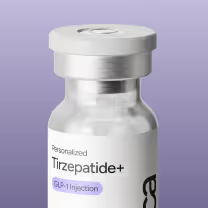
The foundation of this success lies in the medications themselves. In the landmark SURMOUNT-1 trial, participants taking the 15mg dose of tirzepatide achieved a 22.5% reduction in total body weight over 72 weeks compared to just 2.4% for the placebo group (Source: Jastreboff et al., NEJM 2022). Tirzepatide is a dual-action medication that activates both GLP-1 and GIP receptors to regulate appetite and blood sugar.
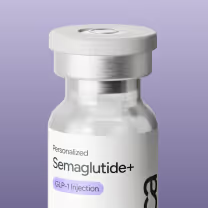
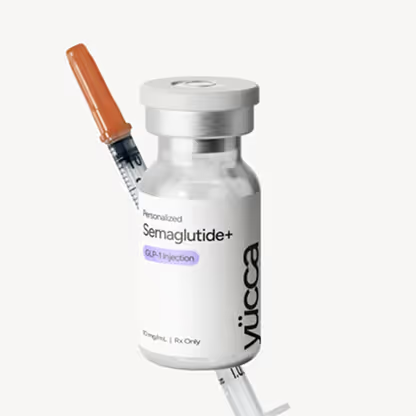
Similarly, the STEP 1 trial showed that once-weekly 2.4mg semaglutide resulted in a 14.9% mean weight loss at 68 weeks (Source: Wilding et al., NEJM 2021). Semaglutide is an active pharmaceutical ingredient that binds to GLP-1 receptors to delay stomach emptying and signal satiety to the brain.
The biological mechanism remains identical whether the prescription comes from a local office or an online provider. The medication slows gastric emptying. Gastric emptying is the process by which food leaves your stomach and enters your small intestine. This delayed digestion works alongside neural signals to suppress cravings. Telehealth simply improves access to these life-changing tools.
Beyond the scale, these treatments offer profound systemic health benefits. Patients using semaglutide have seen a 20% reduction in major cardiovascular events like heart attacks and strokes (Source: SELECT Trial, NEJM 2023). A virtual clinic continuously monitors these broader metabolic health improvements through regular lab updates and digital health tracking.
How to spot a low-quality medical weight loss online clinic
The rapid expansion of virtual obesity medicine has attracted businesses that prioritize transaction speed over patient safety. Understanding how to identify a legitimate clinic protects your health and your financial investment. You must learn to separate authentic medical providers from internet pill mills.
A high-quality virtual clinic acts as a comprehensive medical partner. A low-quality platform functions merely as a medication vending machine.
The most critical red flag is the absence of required lab work. Legitimate providers must verify your internal biological markers before authorizing treatment. If a website promises instant approval or guarantees a prescription within minutes of filling out a basic form, it is bypassing essential medical protocols.
In early 2026, the FDA issued updated guidance restricting the mass marketing of compounded drugs that are essentially copies of approved medications. The agency emphasized that compounded medications must be prescribed based on individual clinical necessity rather than mere convenience (Source: FDA Intends to Take Action Against Non-FDA-Approved GLP-1 Drugs, 2026). True medical clinics strictly adhere to these federal regulations. They evaluate each patient to determine the precise medical need for a specific compound format or dosage.
You must also verify the source of the medication itself. Reputable telehealth platforms transparently disclose their pharmacy partnerships. They exclusively use PCAB-accredited compounding pharmacies. PCAB-accredited is a rigorous national certification indicating a compounding pharmacy meets the highest standards for quality and safety. If a provider hides their pharmacy location or ships unverified research peptides, it is not a safe option for your body.
Finally, evaluate the ongoing support structure. The best virtual setups provide direct messaging access to your clinical team. You can read more about what to expect from our providers when evaluating these clinical standards. You should never be relegated to an automated chatbot when you have a medical question about your dose or a new side effect. Transparent pricing should also cover both the medication and ongoing clinical care without hidden membership traps.
Why a woman's biology requires a different approach to GLP-1s
As a woman, your experience with metabolic health often looks different than what you read about in general medical overviews. Hormonal fluctuations significantly impact how your body stores and burns fat. A sophisticated virtual obesity medicine provider understands these nuances and tailors your treatment accordingly.
Insulin resistance frequently drives stubborn weight gain in women. Insulin resistance is a condition where your cells stop responding to insulin properly and cause your body to store excess glucose as fat.
This condition is especially prevalent in women diagnosed with Polycystic Ovary Syndrome. Approximately 12% of adult women live with PCOS (Source: Oxford Academic, 2026). For these patients, GLP-1 medications do much more than suppress appetite. A 2026 meta-analysis confirmed that GLP-1 treatment effectively reduces body mass index and may improve ovulatory function by correcting the underlying insulin resistance associated with the condition (Source: European Journal of Endocrinology, 2026).
The menopause transition presents another distinct metabolic challenge for women. Shifts in estrogen levels routinely cause an increase in visceral fat around the abdomen. Visceral fat is the deep internal fat that surrounds your organs and increases the risk of metabolic disease. Traditional dieting and willpower rarely impact this hormonally driven weight gain. GLP-1 medications help counteract this specific metabolic slowdown.
Fertility considerations also require specialized clinical guidance. While metabolic correction can improve overall fertility over time, GLP-1 medications must be strictly managed around pregnancy. Medical protocols require a two-month washout period. Washout period is the specific length of time a patient must stop taking a medication to ensure it is completely cleared from their system. A dedicated online provider will proactively manage this timeline if you are planning to conceive.
Addressing the constant mental chatter around food provides profound relief for many women. Correcting the metabolic signaling creates newfound brain space. This allows you to focus on your life, your career, and your family rather than constantly negotiating with your next meal.
Frequently Asked Questions
How does a virtual weight loss doctor work?
A virtual weight loss doctor uses secure video calls and digital health tools to provide medical obesity care remotely. After an initial intake and medical history review, the provider orders lab work to check your metabolic health. They then create a personalized treatment plan, which may include GLP-1 medications and lifestyle coaching.
Can a virtual weight loss doctor prescribe GLP-1 medications?
Yes, a virtual weight loss doctor can prescribe GLP-1 medications like semaglutide or tirzepatide if they are licensed in your state and determine the medication is clinically appropriate. This decision follows a thorough review of your medical history, current BMI, and blood work results during a telehealth consultation.
Do I need lab work for a virtual weight loss consultation?
Reputable virtual weight loss doctors require recent lab work before prescribing metabolic medications. Blood tests typically check your A1C, kidney function, and lipid levels to ensure treatment is safe. Most providers allow you to complete these tests at a local laboratory like Quest Diagnostics or LabCorp.
Is seeing a weight loss doctor online safe?
Telehealth weight loss is safe when conducted by licensed medical professionals who follow strict clinical protocols. High-quality programs require medical histories, blood work, and ongoing monitoring. Avoid services that promise instant prescriptions without a provider review, as these lack the necessary oversight for safe metabolic treatment.
What is the difference between a virtual and in-person weight loss clinic?
Virtual clinics offer the convenience of attending appointments from home and often provide more frequent digital check-ins. In-person clinics may perform physical measurements like body fat percentage on-site. Both models use the same medical standards for prescribing GLP-1s, provided the virtual clinic requires comprehensive lab work.
If you are ready to move past the myth that weight is purely a willpower problem, a licensed Yücca provider can help you review the data behind your metabolic health. We act as your clinical support team for the long term. You can complete your medical intake at tryyucca.com to see if your biology is a fit for a personalized protocol safely.
This article is for informational purposes only and does not constitute medical advice. Always consult a qualified healthcare provider before starting any new medication or treatment. Results may vary. Compounded semaglutide and compounded tirzepatide have not been approved or evaluated by the FDA for any indication.
References

Aaron Lee is the co-founder and CEO of Yucca Health, with over a decade of experience spanning clinical operations, growth marketing, and healthcare strategy. His writing draws on 15+ years in the industry to explore health, technology, and the systems worth fixing — making complex topics clear and actionable.
Read Full Bio