







The standard clinical protocol requires four to sixteen weeks of gradually increasing doses before you reach a steady level of medication in your bloodstream. You step on the scale after a month of careful eating and weekly injections, only to see the exact same number staring back at you. This static number feels incredibly isolating. It is easy to assume you are the only person this medication does not work for. That assumption is biologically incorrect. When you are not losing weight on semaglutide, your body is typically executing a predictable metabolic response or adjusting to an introductory dose designed strictly for safety. We are going to look at the biology of plateaus, the realities of metabolic adaptation, and the exact next steps required to restart your progress. Understanding this mechanism is the first essential step to moving forward confidently.

Key Takeaways
- Clinical trials show that peak weight loss on semaglutide occurs around 60 to 65 weeks into treatment, meaning early stalls are rarely a sign of medication failure.
- The first four to eight weeks of treatment utilize a low loading dose designed strictly to prevent severe nausea rather than to burn body fat.
- A true medical plateau requires four to six weeks of zero change in both scale weight and physical clothing measurements.
- Severely restricting your calories during a stall lowers your resting metabolic rate and actively prolongs the plateau.
The difference between the titration phase and the therapeutic dose
How long does it take for semaglutide to work? It typically takes four to sixteen weeks to reach a steady therapeutic dose and begin seeing significant, measurable weight loss. During your first few weeks on the medication, your provider prescribes a low loading dose. This initial amount is usually 0.25 milligrams. The strict biological purpose of this dose is to help your gastrointestinal system adapt to the compound. This introductory period minimizes severe side effects like nausea and vomiting. You are not expected to lose substantial body mass during this early initiation phase.
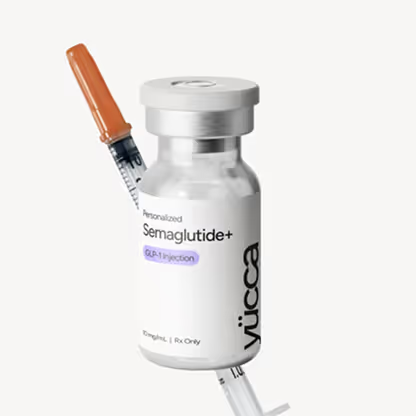
Semaglutide is a GLP-1 receptor agonist, a medication that mimics a natural hormone to signal fullness and slow down your digestion. Because this compound fundamentally alters how quickly your stomach empties, flooding your system with a high dose immediately would cause severe physical distress. Your body requires a systematic escalation to build a safe tolerance.
We manage this escalation through a titration schedule. Titration schedule, a structured clinical plan that slowly increases your medication dose over several months to let your body adjust safely.
Semaglutide titration schedule vs therapeutic dose
Treatment monthStandard weekly dosagePhase objectiveMonth 1 (Weeks 1 to 4)0.25 mgInitiation and side effect mitigationMonth 2 (Weeks 5 to 8)0.5 mgOngoing tolerance buildingMonth 3 (Weeks 9 to 12)1.0 mgInitial therapeutic dose and weight reductionMonth 4 (Weeks 13 to 16)1.7 mgAdvanced therapeutic doseMonth 5+ (Week 17 onward)2.4 mgMaximum maintenance dose
The active ingredient in this medication has a half-life of approximately seven days. Half-life, the time required for the concentration of a medication in your bloodstream to decrease by exactly fifty percent. It takes multiple weeks of overlapping doses to reach a steady state in your blood. Steady state, the point when the amount of medication entering your body equals the amount leaving it.
In the landmark STEP 1 trial, participants on the 2.4 milligram maintenance dose lost an average of 14.9 percent of their body weight over 68 weeks (Source: STEP 1 Trial, 2021). However, 86 percent of those specific patients required the full 16-week escalation period to reach that optimal level and see maximum results (Source: STEP 1 Trial, 2021). If you are only in week three, your journey has just begun.
What causes a true semaglutide weight loss plateau
A true medical weight loss plateau occurs when your scale weight and physical body measurements remain completely unchanged for four to six consecutive weeks. Fluctuating up and down by two pounds over a period of ten days is a normal biological rhythm. A frozen scale over a month-long period indicates that your body has temporarily equalized its energy balance.
This equalization is driven by metabolic adaptation, the biological process where your body burns fewer calories to protect itself from starvation as you lose weight.
Think of your metabolism as a complex internal thermostat. When you carry a higher body mass, your internal furnace must burn a large amount of fuel just to keep you moving and functioning. As you successfully lose weight on semaglutide, you become a smaller, more physically efficient organism. Your body requires less daily energy to survive. Your thermostat naturally turns down to conserve fuel. This means the daily caloric deficit that originally caused you to lose two pounds a week is now exactly the amount of food you need to maintain your current weight.
This biological shift is normal.
Furthermore, scale weight rarely tells the entire story. Semaglutide alters your body composition. Body recomposition, the simultaneous physiological process of losing fat mass while building or maintaining heavy skeletal muscle.
Muscle tissue is significantly denser than fat tissue. If you are consistently eating adequate protein and staying active, you may be dropping physical clothing sizes and losing visceral fat while the number on the scale remains completely static. Visceral fat, the deep abdominal fat that wraps around your internal organs and increases your metabolic health risks.
It is also important to address the reality of non-responders. Approximately 10 to 15 percent of patients are considered true clinical non-responders, meaning they lose less than 5 percent of their body weight after a full course of treatment on a therapeutic dose (Source: Johns Hopkins Medicine, 2026). This is a clinical reality rooted in individual genetics. It is never a sign of personal failure or a lack of discipline.
How to break a weight loss stall on semaglutide safely
When the scale stops moving, the most common patient reaction is a deep sense of panic. This panic frequently leads to extreme dietary restriction. Patients attempt to force the scale down by slashing their food intake to dangerously low levels.
That is the worst possible approach.
Starving yourself actively damages your progress. Severe calorie restriction forces your body into a protective physiological state. It rapidly lowers your basal metabolic rate. Basal metabolic rate, the baseline number of calories your body needs to perform basic life-sustaining functions like breathing and pumping blood. When you drop your calories too low, your body begins breaking down your metabolically active muscle tissue for emergency fuel. Losing muscle mass guarantees that your plateau will last longer and be harder to break.
Common reasons you are not losing weight on semaglutide
- You are severely under-eating and slowing your basal metabolic rate.
- You are experiencing medication-induced constipation which artificially inflates scale weight.
- You are losing body fat but retaining temporary water weight due to physiological stress.
- You are not eating enough protein to preserve your metabolically active muscle tissue.
To safely break a weight loss stall on semaglutide, you must focus on biological support rather than extreme deprivation. You must prioritize your structural health. This means eating adequate protein at every meal. High protein intake signals to your body that it is safe to burn stored fat rather than cannibalizing muscle tissue.
Hydration is equally critical. Delayed gastric emptying often reduces your natural thirst cues. Gastric emptying, the physical process of digested food leaving your stomach and entering your small intestine. When this slows down, you forget to drink water. Chronic dehydration leads directly to constipation, which can easily add three to five pounds of static weight to the scale.
If you have optimized your nutrition and hydration, and the scale remains frozen for more than six weeks, it is time to consult your provider. As clinical understanding and telehealth standards continue evolving rapidly in 2026, we know that absorption rates vary significantly among individuals. If you are struggling with a long-term stall, exploring alternative delivery methods may be the right clinical choice. Comparing the metabolic impact of oral daily tablets versus weekly subcutaneous injections helps you and your provider find the optimal pathway for your specific biology. Subcutaneous injection, a shot given into the fatty tissue layer located just under the skin.
How hormones and life stages impact your progress
Metabolic plateaus do not happen in a vacuum. Your daily progress is heavily influenced by your underlying endocrine system. Clinical meta-analyses demonstrate that female patients frequently lose slightly more absolute weight on GLP-1 receptor agonists compared to male patients (Source: PMC Meta-Analysis, 2024). However, the day-to-day journey for those managing complex hormonal cycles is rarely a straight line downward.
Hormonal fluctuations cause severe water retention. During specific phases of a menstrual cycle, rising progesterone levels naturally cause the body to stockpile fluid. This fluid retention easily masks true fat loss on the scale for up to two weeks out of every month. You may be successfully burning fat every single day, but the scale will not reflect that progress until the hormonal water weight flushes out.
Patients managing specific endocrine disorders face unique timelines. Many people taking semaglutide are actively treating polycystic ovary syndrome. Polycystic ovary syndrome, a hormonal imbalance that often causes severe insulin resistance and makes traditional weight loss extremely difficult. As semaglutide improves your cellular insulin response, it can unexpectedly restore regular ovulation. This profound metabolic healing happens internally long before the scale shows a dramatic drop.
For adults navigating perimenopause and menopause, preserving muscle mass becomes the absolute highest priority. Dropping estrogen levels naturally encourage the body to store fat around the midsection. While semaglutide helps counteract this specific metabolic shift, aging naturally decreases your baseline muscle mass. You must actively fight this decline with consistent resistance training. A stalled scale during menopause is often a sign that your body requires more structural support and protein, rather than a higher dose of medication.
Frequently Asked Questions
Why am I not losing weight on semaglutide yet?
It is common to not lose weight during the first few weeks of taking semaglutide. You are likely in the titration phase, slowly increasing your dosage to minimize side effects. Significant weight loss typically begins once you reach a steady therapeutic dose.
How long does a semaglutide weight loss plateau last?
A true weight loss plateau on semaglutide generally lasts four to six weeks without any scale movement. However, your body may still be changing. You might be losing fat while retaining water or building muscle, which keeps the scale static temporarily.
Does semaglutide stop working after a few months?
Semaglutide does not simply stop working, but your body undergoes metabolic adaptation. As you lose weight, your resting metabolic rate decreases, meaning you burn fewer calories naturally. This biological shift is normal and often requires slight lifestyle adjustments to continue progressing.
How do I break a semaglutide weight loss plateau?
To break a semaglutide weight loss plateau, consult your provider about adjusting your dosage. Additionally, focus on eating adequate protein to preserve muscle mass, prioritize hydration, and incorporate resistance training. Small adjustments to your daily movement can also help restart progress.
Can you be a non-responder to semaglutide?
Yes, a small percentage of patients are clinical non-responders to semaglutide, meaning they do not lose at least five percent of their body weight after several months on a therapeutic dose. In these cases, a provider may recommend switching to an alternative GLP-1 medication.
Why am I gaining weight on semaglutide?
Temporary weight gain on semaglutide is usually due to water retention, constipation, or hormonal fluctuations rather than fat accumulation. If you recently started, your body is still adjusting to the medication. Track your measurements and symptoms alongside your weight to see the full picture.
Your next steps
A stalled scale is a frustrating but entirely normal chapter in your metabolic health journey. You do not have to navigate dealing with a weight loss plateau through guesswork or restrictive dieting. If you are wondering whether your current dosage needs an adjustment or if your symptoms require a fresh clinical perspective, a licensed Yücca provider can help. You can complete a brief medical check-in through your patient portal to review your timeline and find a science-backed plan that works optimally for your biology.
This article is for informational purposes only and does not constitute medical advice. Always consult a qualified healthcare provider before starting any new medication or treatment. Results may vary. Compounded semaglutide and compounded tirzepatide have not been approved or evaluated by the FDA for any indication.
References

Bethany Kelleher is the CX Manager at Yücca Health, bringing over 20 years of experience across fitness, wellness, and healthcare. Her journey started with her own 100+ pound transformation, which inspired a career in coaching, nutrition, and patient experience. At Yücca, she combines her wellness expertise with healthcare operations to create supportive, results-driven patient experiences.
Read Full Bio