






How to Build Muscle on Semaglutide & Tirzepatide
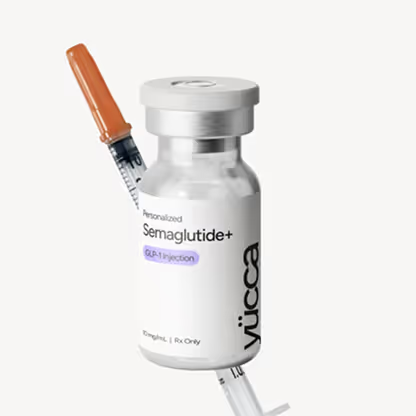
Up to 39 percent of the weight lost on semaglutide can consist of lean muscle mass (Source: Wilding et al., NEJM 2021). You are losing weight on the scale, but you might feel physically weaker or more fatigued than before you started your medication. That happens because a severe caloric deficit forces your body to break down its own muscle tissue for energy. The resulting loss of functional strength is a preventable condition, not an inevitable side effect. This guide details exactly how to build muscle on semaglutide using provider-backed nutrition, realistic strength training, and complementary peptide therapies.

Key Takeaways
- Patients taking semaglutide and tirzepatide often lose significant lean body mass due to rapid, medication-induced caloric deficits.
- Clinical trials demonstrate that progressive resistance training helps patients preserve up to 1.8 kilograms more lean mass during treatment.
- Providers recommend consuming 1.2 to 2.0 grams of protein per kilogram of body weight daily to signal continuous muscle repair.
- Compounded Sermorelin acts as a specialized clinical tool to stimulate natural growth hormone production and protect your metabolic function.
The physiology of fat loss versus muscle loss on GLP-1 medications
When you take a weight-loss medication, your appetite drops dramatically. This happens through the action of a GLP-1, a naturally occurring hormone that regulates your appetite and blood sugar levels while signaling your brain that you are full. Because you are eating far fewer calories, your body has to find the missing energy elsewhere. It begins by breaking down your stored body fat.
When you take a weight-loss medication, your appetite drops dramatically. This happens through the action of a GLP-1, a naturally occurring hormone that regulates your appetite and blood sugar levels while signaling your brain that you are full. Because you are eating far fewer calories, your body has to find the missing energy elsewhere. It begins by breaking down your stored body fat.
However, your body will also strip away muscle tissue for quick fuel when pushed into a severe deficit. Think of your physical body like a hybrid car. When it runs low on standard gas, it taps into the electric battery. If you push the engine too hard without ever refueling, it eventually starts breaking down its own mechanical parts to keep moving forward.
This breakdown leads to a condition known clinically as sarcopenia. Sarcopenia is the rapid, diet-induced or age-related loss of skeletal muscle mass and functional strength. Losing muscle is a serious medical concern because muscle tissue serves as your primary metabolic sink. A metabolic sink is an area of the body that absorbs and uses large amounts of circulating glucose for energy. If you lose too much muscle, your metabolism slows down. That makes it significantly harder to maintain your target weight if you ever stop taking the medication.
To clarify how your body uses different tissues for energy, review the typical metabolic responses during a caloric deficit.
What the research says about semaglutide muscle loss
Clinical trial data provides a clear picture of exactly how body composition changes during medical weight loss. In the 2025 SURMOUNT-1 substudy, patients treated with tirzepatide lost significant total body weight over 72 weeks. Tirzepatide utilizes a GIP receptor agonist, a medication component that mimics a natural hormone to further improve blood sugar control and fat metabolism alongside GLP-1. Researchers found that approximately 25 percent of the total weight lost was lean mass, while 75 percent was fat mass (Source: SURMOUNT-1 Substudy, 2025).
The data for semaglutide shows a similar pattern. The landmark STEP 1 trial revealed that roughly 39 percent of the weight lost by patients on semaglutide consisted of lean mass reductions (Source: Wilding et al., NEJM 2021).
Researchers measured these precise changes using a DEXA scan. A DEXA scan is a specialized low-dose X-ray imaging test that precisely measures your bone density, fat mass, and skeletal muscle mass. While the percentages sound alarming, subsequent research offers a highly effective solution. A 2023 randomized controlled trial tracked patients taking 2.4 mg of semaglutide. The researchers found that patients who participated in a supervised resistance training program three times per week retained 1.8 kg more lean mass than the control group (Source: Semaglutide & Resistance Training RCT, 2023).
That matters deeply for your long-term success. The clinical data proves that muscle wasting is a preventable condition that responds directly to how you train and fuel your body.
A provider-backed protocol for body recomposition
You can actively transition from simply losing weight to optimizing your body composition. Reaching your goals requires shifting your focus away from the daily scale and toward functional strength.
Here is how to prevent muscle loss on semaglutide using a clinical framework.
- Prioritize protein. Consume 1.2 to 2.0 grams of protein per kilogram of your goal body weight daily. Protein provides the essential amino acids required to repair tissue. If medication-induced nausea makes eating difficult, rely on clear whey isolates, bone broth, and small, frequent meals rather than large portions. You can learn more about hitting your daily protein targets.
- Lift weights. Progressive resistance training is non-negotiable for muscle preservation. Aim for three to four days of lifting weights per week. Focus on compound movements like squats, deadlifts, and overhead presses. These exercises recruit multiple muscle groups at once and provide the strongest signal to your brain that your muscle tissue is necessary for survival.
- Hydrate. Mild dehydration mimics the symptoms of extreme fatigue. Water is required to transport nutrients into your muscle cells for repair. Add clinical-grade electrolytes to your water if you struggle to eat enough whole foods during the day.
- Consider peptide therapies. Medical weight loss programs often utilize advanced recovery tools to protect your metabolism. Compounded Sermorelin acts as a powerful adjunctive therapy. Sermorelin is a synthetic peptide that prompts your pituitary gland to naturally produce and release human growth hormone. Increased growth hormone levels signal your liver to produce IGF-1. IGF-1 is an endocrine hormone that directly promotes cell growth and continuous muscle recovery.
Integrating Sermorelin therapy helps your body prioritize fat loss while keeping your muscle intact. Read benefits of compounded sermorelin for recovery to understand how this therapy fits into a comprehensive medical weight loss plan. Understanding how to prevent muscle wasting on semaglutide ensures you build a resilient, capable body.
Hormones, bone density, and muscle mass across life stages
Your baseline hormone levels dictate how rapidly you might lose muscle during a caloric deficit. Estrogen plays a profound role in protecting lean muscle mass and maintaining structural bone density. As people enter perimenopause and menopause, declining estrogen levels severely accelerate the natural rate of muscle loss.
Combining these natural life transitions with medication-induced weight loss drastically compounds your physical risks. Rapid weight reduction without resistance training strips away the structural support surrounding your joints. Furthermore, lean body mass includes your bone tissue. Severe muscle loss correlates tightly with reduced bone density, making load-bearing exercises a medical necessity to prevent future osteoporosis.
Patients managing specialized endocrine disorders also experience unique shifts. Individuals with PCOS often utilize GLP-1 medications to manage severe insulin resistance. PCOS is a hormonal condition characterized by irregular periods, excess androgen levels, and systemic metabolic challenges. Because hyperandrogenism sometimes creates a higher baseline of lean mass, these patients may notice a more dramatic shift in their body composition and physical strength as their hormones balance out and total body weight rapidly drops.
Regardless of your exact life stage, treating strength training as a form of preventative medicine protects your long-term mobility.
Frequently Asked Questions
Can you build muscle on semaglutide?
Yes, you can build muscle on semaglutide by combining a targeted resistance training program with a high-protein diet. While GLP-1 medications create a caloric deficit that primarily targets fat, consistent strength training signals your body to preserve and build lean muscle mass simultaneously.
Does semaglutide cause muscle loss?
Semaglutide itself does not directly destroy muscle. However, rapid weight loss from severe caloric deficits can lead to losing lean body mass alongside fat. You can prevent this "muscle wasting" by eating adequate protein and prioritizing weightlifting during your treatment.
How much protein should I eat on tirzepatide?
To maintain or build muscle on tirzepatide, most experts recommend consuming 1.2 to 2.0 grams of protein per kilogram of body weight daily. Prioritizing lean meats, dairy, and protein supplements helps preserve lean mass while keeping you satiated during a caloric deficit.
What is the best workout while taking GLP-1 medications?
The best workout while taking GLP-1 medications is progressive resistance training. Aim for three to four days of lifting weights per week, focusing on compound movements like squats, deadlifts, and presses. This approach maximizes muscle retention and supports overall metabolic health.
How does sermorelin help during weight loss?
Sermorelin is a peptide that stimulates your body's natural production of human growth hormone. During medical weight loss, it can act as a complementary therapy to support muscle recovery, improve sleep quality, and help preserve lean body composition while you lose body fat.
Why do I feel weaker on weight loss injections?
Feeling weaker on weight loss injections is usually caused by inadequate calorie intake, mild dehydration, or insufficient protein consumption. When your body lacks fuel, your energy levels drop. Adjusting your macros, drinking more water, and adding electrolytes often resolves this temporary fatigue.
If you are feeling exhausted during your workouts or worried about losing your functional strength, our clinical team is here to help. Reach out to a Yücca provider to discuss personalized protein targets or complementary therapies like Sermorelin to support your body recomposition goals.
This article is for informational purposes only and does not constitute medical advice. Always consult a qualified healthcare provider before starting any new medication or treatment. Results may vary. Compounded semaglutide and compounded tirzepatide have not been approved or evaluated by the FDA for any indication.
References

Aaron Lee is the co-founder and CEO of Yucca Health, with over a decade of experience spanning clinical operations, growth marketing, and healthcare strategy. His writing draws on 15+ years in the industry to explore health, technology, and the systems worth fixing — making complex topics clear and actionable.
Read Full Bio