






Most people assume the heavy fatigue they feel during their first weeks of GLP-1 treatment means they are failing at their fitness routine. The reality is entirely different. Your body is undergoing a massive metabolic shift that requires a completely new approach to physical movement. If you feel like your limbs weigh hundreds of pounds since starting your weekly shot, you are not lazy. You are experiencing the physiological reality of a rapid caloric deficit. When you navigate exercise on GLP-1 medications, you are no longer just trying to burn excess calories. You are actively trying to signal your body to keep its most metabolically active tissue. We are shifting the focus from simple scale weight to functional longevity. This guide breaks down the biological changes happening in your system and provides clinical strategies to protect your lean mass while maximizing fat loss.

Key Takeaways
- Rapid weight loss creates a catabolic environment that can cause your body to break down up to 40 percent of its lean mass if you do not actively intervene.
- Resistance training provides the essential mechanical tension needed to signal your body to burn stored fat instead of your metabolically expensive muscle tissue.
- Clinical guidelines now recommend consuming 1.2 to 2.0 grams of protein per kilogram of body weight to trigger muscle repair during a caloric deficit.
- Workout intensity should be intentionally timed around your medication half-life to accommodate the expected fatigue and nausea that peak in the first two days after an injection.
- Patients who combine their medication with structured strength training can increase their proportion of lean mass significantly compared to those who rely on medication alone.
The science of sarcopenia and why medications change the rules of muscle
Think of your metabolism as a complex hybrid engine. When you take a medication like semaglutide or tirzepatide, you are effectively turning down the primary fuel intake by reducing your overall appetite. GLP-1, a hormone your gut releases after eating that tells your brain you are full and slows digestion to make that feeling last. If you do not use your physical engine regularly or provide it with the right structural parts, your biology decides it no longer needs such a large and heavy engine. It will start cannibalizing its own muscle tissue to save energy.
This biological process is driven by the glucose-alanine cycle. The glucose-alanine cycle, a sequence where the body breaks down skeletal muscle into amino acids to generate quick energy during a caloric deficit. When you lose weight rapidly, your body views this severe energy deficit as a potential famine. In this restricted state, your system wants to shed its most expensive tissue first. Muscle burns calories just by existing, while fat acts as a passive storage tank.
To keep your muscle, you have to prove to your biology that you still need it. Resistance training is that exact proof. Lifting heavy weights or using resistance bands provides mechanical tension that acts as an anabolic signal. An anabolic signal, a chemical message that instructs your body to build or maintain tissue rather than tear it down. This tension creates microscopic tears in your muscle fibers.
When you follow up this physical stress with high-quality protein, you trigger muscle protein synthesis. Muscle protein synthesis, the biological mechanism your body uses to repair and build new lean mass.
This powerful combination forces your system to pull the energy it needs from your fat stores instead of your muscle. You are protecting your metabolic engine while you lose the extra weight. Preventing muscle loss on semaglutide requires this exact mechanism. Without it, you risk sarcopenic obesity. Sarcopenic obesity, a condition where a person loses significant muscle mass while retaining high levels of body fat.
To give your body the building blocks it needs to execute this process, you must hit specific nutritional targets. The best approach is to calculate your exact protein requirements for GLP-1 patients based on your goal body weight.
How to calculate protein needs on semaglutide
Beyond the scale with clinical evidence for muscle preservation
The fear of losing physical strength or becoming skinny fat is entirely valid and heavily documented in modern metabolic research. Major clinical trials reveal exactly what happens when patients rely solely on medication without adjusting their physical activity. Without intervention, 25 to 40 percent of the weight lost on these medications is typically lean mass (Source: Vedic Nutrition, 2026).
Data from the landmark STEP 1 trial highlights this reality clearly. Participants taking semaglutide lost an average of 14.9 percent of their body weight over 68 weeks (Source: Wilding et al., NEJM 2021). A specialized sub-study using DEXA scans showed a 9.7 percent decrease in absolute lean body mass. However, there is a critical distinction between absolute loss and proportional health. Because these patients lost so much total fat, their actual proportion of lean mass relative to total body weight increased by 3.0 percentage points.
That matters. It proves that proper management can improve your overall body composition.
The SURMOUNT-1 trial for tirzepatide confirmed similar physical outcomes. Patients achieved up to 20.9 percent weight loss at 72 weeks (Source: Jastreboff et al., The Lancet 2022). The sub-study data showed lean mass accounted for 25 percent of total weight lost, while fat mass accounted for 75 percent. This is a remarkably superior ratio compared to weight loss through severe calorie restriction alone, where lean mass loss can routinely reach up to 40 percent.
Recent clinical shifts focus heavily on active interventions to improve these ratios even further. The 2026 LEAN-PREP study evaluated the synergy of consuming 1.6 grams of protein per kilogram of body weight alongside dedicated resistance exercise (Source: ClinicalTrials.gov NCT06885736). Preliminary findings suggest this combination successfully reduces lean mass loss to under 15 percent of total weight lost.
Observation data reinforces the power of mechanical tension. Members in a structured strength-training program increased their muscle mass percentage by three times compared to those on medication without guidance (Source: Omada Health Study, 2026). Prioritizing resistance training for weight loss does not just sculpt the body. It actively preserves your resting metabolic rate so you burn more calories at rest over the long term.
The seven day training split to outsmart the injection day slump
Most traditional fitness advice relies on toxic messaging that tells patients to push through the pain. This approach fails entirely when you are dealing with the legitimate chemical fatigue of a caloric deficit. Navigating GLP-1 fatigue and exercise requires a strategic partnership with your body, not a battle of willpower. You must align your workout intensity with the biological half-life of your medication to succeed.
Days one and two after your weekly injection represent the slump. This is the 24 to 48 hour window when nausea, lethargy, and suppressed appetite typically peak. Your goal during this window is gentle movement. Focus on zone two cardio, mobility work, or light walking. Zone two cardio, low-intensity aerobic exercise where you can comfortably hold a conversation while moving. Acknowledge the fatigue and do not attempt to set personal records at the gym.
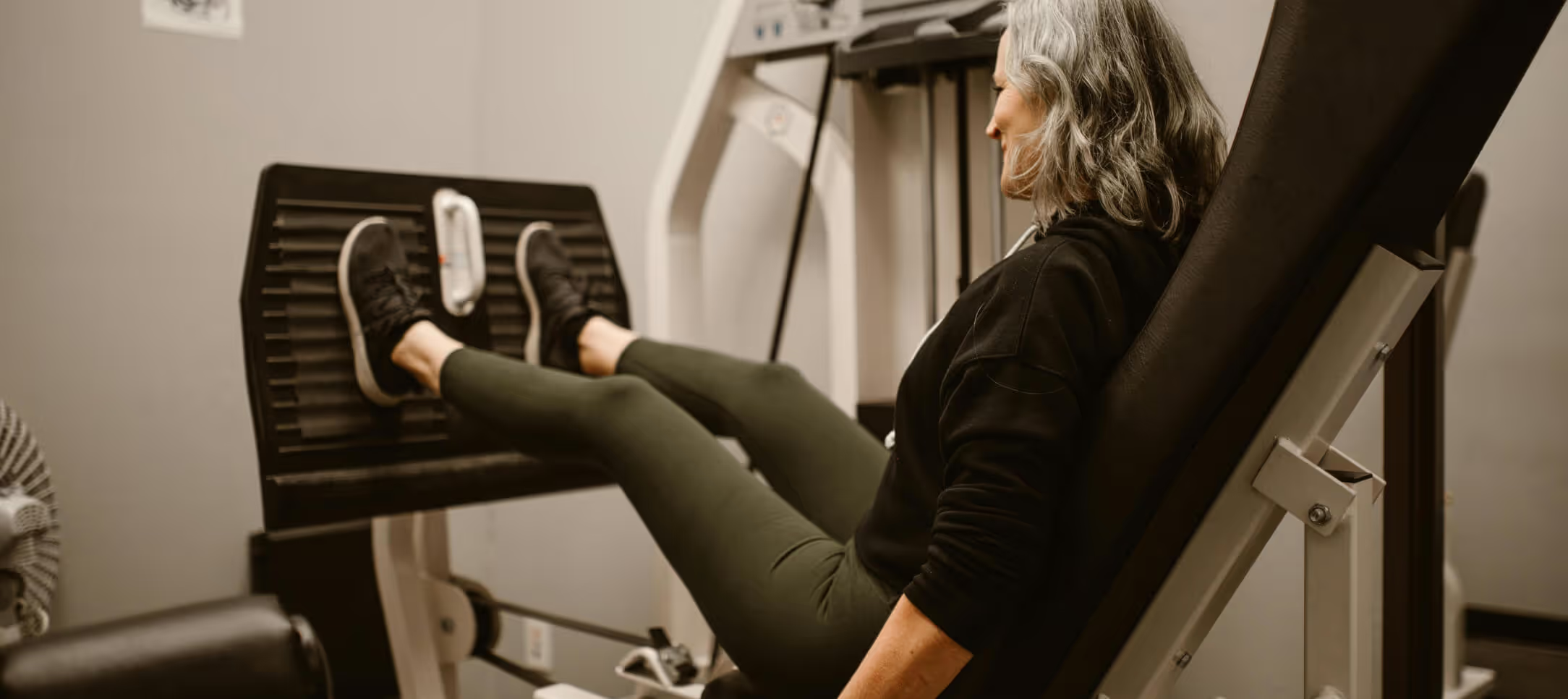
Days three through six are your dedicated strength window. As the medication concentration slightly dips in your bloodstream, your natural energy levels will begin to rebound. This is the optimal time to schedule your heavy resistance training. You want to execute two to three solid sessions of weight-bearing exercise during these days. Focus on compound movements like squats and presses that recruit multiple large muscle groups to maximize your anabolic signaling.
Day seven is your pre-shot opportunity. You can push for a higher-intensity cardiovascular session or a final heavy lift before your next dose resets the weekly cycle.
Best types of exercise for GLP-1 patients
Some weeks will feel impossible regardless of how well you plan your split. On days when your fatigue feels completely overwhelming, pivot to a micro-workout menu. Ten minutes of focused resistance band exercises in your living room is infinitely better than skipping movement entirely. Consistency in signaling your muscles matters far more than the duration of the workout.
Small, frequent mechanical stress still proves to your biology that your muscles are necessary for survival. Hydrating heavily with electrolytes and consuming easily digestible carbohydrates thirty minutes before movement can drastically reduce lightheadedness. Implementing a well-timed exercise to combat GLP-1 fatigue keeps you moving forward without breaking your body down.
Hormonal and life stage considerations for muscle preservation
The physiological need to maintain muscle mass and bone density applies universally, but specific hormonal landscapes require extra attention and care. Rapid weight loss drastically changes how your body supports its structural framework.
Bone health is a primary concern for older adults and individuals navigating the hormonal shifts of menopause. Significant weight reduction directly increases the risk of osteopenia. Osteopenia, a clinical decrease in bone mineral density that serves as a precursor to osteoporosis. When you carry less body weight day to day, your skeletal system experiences less daily physical impact. Resistance training becomes a non-negotiable requirement for bone loading. The physical pull of muscle against bone during strength training stimulates bone-building cells, keeping your skeleton dense and highly resilient.
Patients managing polycystic ovary syndrome also face entirely unique variables. Polycystic ovary syndrome, a hormonal disorder causing enlarged ovaries with small cysts that is often accompanied by severe insulin resistance. GLP-1 medications often help restore hormonal balance and drastically improve insulin sensitivity for these individuals. However, skeletal muscle is your body's largest sink for glucose disposal. Maintaining lean mass ensures that the insulin sensitivity gains achieved through the medication are locked in permanently.
This is pure metabolic rate preservation.
There is also the aesthetic and functional fear of the melting effect. As the scale drops rapidly, patients frequently notice sagging skin or a sudden loss of physical shape. This happens when the underlying structural muscle diminishes alongside the fat. Functional strength training fills out the physical space left by shrinking fat stores. It provides essential postural support and joint stability. Whether you are dealing with fluctuating testosterone levels, menopausal shifts, or metabolic disorders, muscle tissue remains your most reliable metabolic insurance policy.
Frequently Asked Questions
Can you build muscle while taking GLP-1 medications?
Yes, it is possible to build muscle while taking GLP-1 medications like semaglutide or tirzepatide. However, it requires a focused strategy involving high protein intake and consistent resistance training. Because these medications often cause a caloric deficit, your body needs specific anabolic signals to prioritize muscle protein synthesis over fat storage.
How do I prevent muscle loss on semaglutide?
To prevent muscle loss on semaglutide, prioritize resistance training at least three times weekly and consume 1.2 to 1.5 grams of protein per kilogram of body weight. This approach signals your body to preserve lean mass while losing fat, protecting your metabolic rate and preventing a "skinny fat" body composition.
Why am I so tired during workouts on GLP-1?
Fatigue during workouts is a common side effect of GLP-1 therapy, often caused by a significant caloric deficit or slowed gastric emptying. To manage this, ensure you are hydrating with electrolytes and consuming easily digestible carbohydrates 30 minutes before training to provide your muscles with readily available glucose.
Is cardio or resistance training better for GLP-1 patients?
While cardio supports heart health, resistance training is the priority for GLP-1 patients. Weight-bearing exercise is essential to counteract the risk of sarcopenia (muscle loss) associated with rapid weight reduction. A balanced routine should include 70% resistance training and 30% low-to-moderate intensity cardiovascular activity for optimal body composition.
Can I take Sermorelin with GLP-1s to protect my muscle?
Many providers prescribe Sermorelin alongside GLP-1 therapy to support muscle preservation and recovery. As a growth hormone secretagogue, Sermorelin can help stimulate lean mass retention and improve sleep quality, which are often compromised during rapid weight loss. Always consult your healthcare provider before combining these supportive therapies.
How much protein should I eat daily on a GLP-1?
For active individuals on GLP-1 medications, clinical guidelines generally recommend 1.2 to 1.5 grams of protein per kilogram of goal body weight. Consuming protein consistently throughout the day ensures a steady supply of amino acids, which is critical for muscle repair when your overall calorie intake is reduced.
If the daily fatigue feels like too much to manage on your own, you do not have to power through it. Our Yücca clinical team can help you fine-tune your protocol to ensure your metabolic health stays exactly as strong as your physical results. Whether that means adjusting your dosage timing or exploring supportive recovery options like Sermorelin for muscle preservation, our providers are ready to support your journey.
References

Bethany Kelleher is the CX Manager at Yücca Health, bringing over 20 years of experience across fitness, wellness, and healthcare. Her journey started with her own 100+ pound transformation, which inspired a career in coaching, nutrition, and patient experience. At Yücca, she combines her wellness expertise with healthcare operations to create supportive, results-driven patient experiences.
Read Full Bio